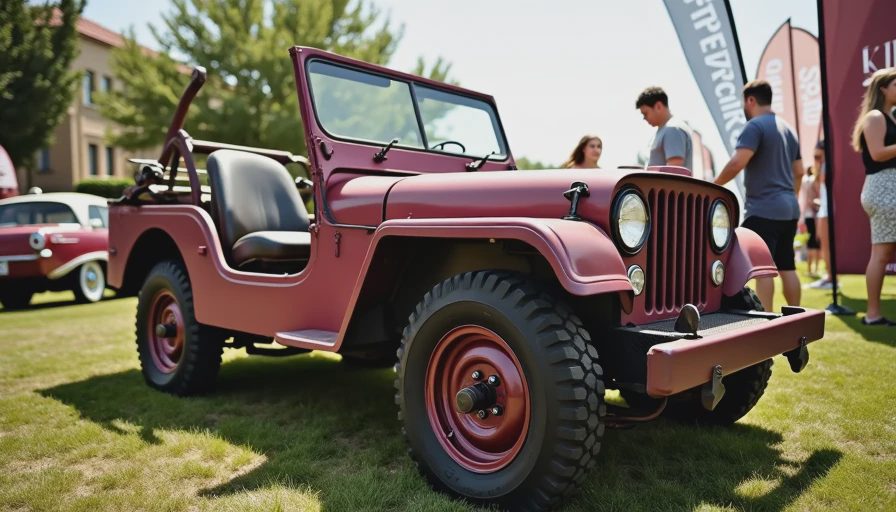
A mil jeep looks simple until you crawl underneath one with a flashlight. The flat fenders, olive paint, and exposed hardware attract people who want an honest old 4x4, but a neglected military Jeep can turn a Saturday project into a year of chasing worn axles and missing paperwork. I have inspected enough of them at my shop in Silverthorne to know the first rule: do not buy the story painted on the hood. Buy the condition underneath it.
When someone asks me about a mil jeep, they usually mean a surplus Willys MB, Ford GPW, M38, or similar military-style Jeep. Those names matter because parts, frame details, engines, and registration requirements vary. Before money changes hands, confirm the model, serial numbers, title status, and intended use. A vehicle that will only appear at shows has different needs from one that will climb a mountain road every weekend.
Identify the Jeep Before Inspecting It
Start with the data plates, frame stamping, and axle markings. A Willys MB and Ford GPW can share many service parts, but original details affect value. Look at the crossmember shape, gussets, tool mounts, body hat channels, and grille construction. Reproduction tubs are common, and there is nothing wrong with one if the seller describes it honestly. Trouble starts when replacement metal is presented as untouched history.
A genuine mil jeep does not need to be perfectly original to be worthwhile. A professionally rebuilt engine, modern wiring, and safer lighting can make an old 4x4 more usable. I would rather buy a straight reproduction body on a solid frame than a claimed survivor with rust hidden under fresh paint. Run your hand along the frame rails. Bubbling paint around a weld is a question mark, not patina.
Check the title before you check the compression. Some surplus vehicles have incomplete ownership records, old military identification numbers, or paperwork that does not match the frame. Your state may require a bonded title, inspection, or special documentation for an antique vehicle. Call the motor vehicle office with the identification information before buying. A bargain that cannot be legally registered is a lawn ornament with tires.
The Frame, Axles, and Steering Tell the Truth
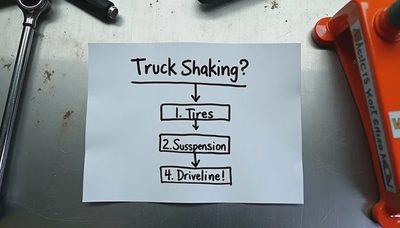
Put the front axle on jack stands and check movement at the wheel. Grab the tire at twelve and six o'clock, then three and nine. A little bearing adjustment is normal; a clunk that travels through the knuckle, tie rod, or steering box needs diagnosis. Do not blame every wobble on tires. I have seen owners replace three sets of tires when the real problem was a loose bell-crank pivot and worn tie-rod ends.
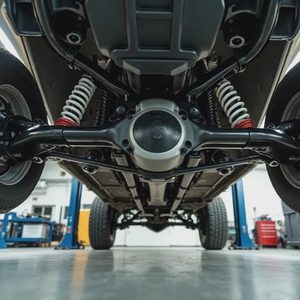
Inspect the frame around the spring hangers, steering box, front crossmember, and rear shackle mounts. Cracks often hide behind undercoating. Tap questionable areas with a small pick, not a hammer swung like you are breaking concrete. The metal will tell you whether you found steel or filler.
Leaf springs should sit reasonably level side to side, and shackles should not be forced against the frame. Measure axle position if the vehicle has been modified. A spring-over conversion, larger tires, or a welded steering correction can be made correctly, but none of those changes should be accepted on faith. Ask for photographs before and after the work, then inspect the welds in person.
Engine and Drivetrain Checks That Save Money
Most old military Jeeps have simple engines, but simple does not mean cheap. Watch the oil pressure when cold and fully warm. A seller who shuts the engine off before it reaches operating temperature may be hiding bearing wear, overheating, or low hot-idle pressure. Look for coolant in the oil, oil in the coolant, fuel leaks at the carburetor, and exhaust smoke after a long downhill coast.
A compression test is useful, but it is not the whole diagnosis. Even readings matter more than one impressive number. Listen for a deep knock that follows engine speed, and inspect the bellhousing for oil trails. The transfer case should engage its ranges without grinding, and the transmission should not jump out of gear on deceleration.
The axles deserve a road test. Whining on acceleration can point toward ring-and-pinion wear; a different whine on coast suggests another contact pattern problem. Check the gear oil for metallic paste on the drain plug. A few gray flecks are one thing. Shiny chips are a parts bill wearing a disguise.
I checked. The last one brought to my bay had a freshly rebuilt engine, according to the owner. The engine was fine. The rear axle had water contamination and bearings that looked like they had been rolled through gravel. That repair cost more than the engine rebuild had cost.

Brakes, Wiring, and Road Equipment
Do not treat brakes as an accessory because the vehicle is old or slow. Inspect wheel cylinders, flexible hoses, steel lines, drums, and the master cylinder. Pulling to one side can mean a contaminated lining, seized cylinder, or collapsed hose. A dual-circuit conversion is a sensible upgrade for regular road use, but it needs proper mounting and correctly routed lines.
Old wiring deserves the same attention. Look for brittle insulation, household wire, twisted connections, and a battery cable routed near exhaust heat. Many restored Jeeps have 12-volt conversions, and that can be perfectly practical. Confirm that the alternator, starter wiring, lights, fuses, and grounds match the system. A replacement fuse is not a repair if the circuit keeps opening.
Seat belts, mirrors, turn signals, and lighting may be required for street registration depending on where you live. They also make a difference when a modern SUV is closing on your rear panel at 55 mph. This is not about making a historic vehicle look modern. It is about giving other drivers a chance to see your intentions.
Insurance and Registration for a Mil Jeep
Insurance is easiest when you describe the vehicle accurately. A mil jeep used for parades, shows, and occasional pleasure driving may qualify for an antique or collector policy. A vehicle driven to work every day, used for trail hauling, or fitted with expensive custom equipment may need a standard policy or a specialty policy with different mileage and storage rules.
Ask how the insurer values the vehicle after a total loss. Actual cash value, stated amount, and agreed value are not interchangeable. Agreed value can be useful for a carefully documented restoration because the settlement is based on a value accepted when the policy begins. Send photographs, receipts, appraisal documents, and a parts list. A $12,000 restoration cannot be defended with one blurry driveway picture.
Liability coverage is still important even if the Jeep is driven only a few miles at a time. If it will travel on public roads, ask about required bodily injury and property damage limits, uninsured motorist coverage, and whether passengers are covered. Comprehensive coverage can address theft, fire, hail, or falling objects, while collision coverage generally addresses damage from an impact. Get quotes using the vehicle identification and actual use, not a vague description like “old Jeep.”
What I Would Pay For and What I Would Skip
I would pay for a straight frame, clean title, sound axles, and brakes that were rebuilt with receipts. I would pay less for shiny paint, reproduction seats, or a rare-looking shovel. Paint is coffee foam: pleasant, but it does not tell you what is in the cup.
A running project with a solid frame might land in the several-thousand-dollar range, while a documented restoration can reach well into five figures. The price gap is not automatically the value gap. A $9,000 Jeep needing $8,000 in drivetrain and brake work is not cheaper than a $15,000 example that can be driven and insured correctly.
Before purchase, make a written inspection sheet covering the frame, title, engine, transmission, transfer case, axles, steering, brakes, wiring, tires, and body. Photograph every identification number. Get an insurance quote before signing, especially if the seller calls it a military vehicle but the paperwork calls it something else.
Emma's Jeep update: she still notices the two-inch lean on my shop truck before I do. That is why we measure instead of guessing. On an old mil jeep, the bolt doesn't lie.
No letters yet — pray write the first.