If you are asking what year jeep grand cherokee to avoid, you are already doing the useful part of buying a used SUV: slowing down before handing over a check. I have had more than one Grand Cherokee on my lift with a clean-looking body and a repair bill hiding underneath. The bolt doesn't lie. Mileage, service history, rust, and the specific engine matter more than a shiny listing photo, but some years deserve a harder look.
The Grand Cherokee years I inspect most carefully
The 2011 through 2013 WK2 Grand Cherokees are the first group I approach with caution. These were early years of a major redesign, and the electrical systems, touchscreen equipment, air suspension, and drivetrain controls can create expensive diagnostic work. A 2011 with the 3.6-liter Pentastar V6 is not automatically junk, and a well-maintained example can still be a useful family vehicle. The problem is buying one without money set aside for age-related repairs.
The 2014 model also deserves a close inspection because it combines early WK2 complexity with the eight-speed automatic transmission and a large amount of electronic equipment. Shifting complaints, transfer-case issues, parking-brake faults, and touchscreen problems do not always announce themselves during a ten-minute test drive. If the seller says, “It just needs a sensor,” ask which sensor, why it failed, and whether the diagnostic scan supports that story.
When people ask what year jeep grand cherokee to avoid, I usually tell them not to treat 2011, 2012, 2013, or 2014 as automatic no-buy years. Treat them as inspection-heavy years. A $9,000 SUV that needs $4,000 of deferred work is not cheaper than a $12,000 SUV with records and tight steering.
Why the 2011-2014 WK2 can become expensive
The 3.6-liter Pentastar V6 is common in these Jeeps. It can run well for a long time, but listen for a ticking noise from the top of the engine, especially when cold. A cylinder-head issue on earlier Pentastar applications can turn into a substantial repair. Oil leaks around the oil cooler housing are another familiar trouble spot; the part sits in the valley of the engine, so an apparently small leak can require several hours of labor.
The 5.7-liter Hemi provides stronger towing performance, but it is not free power. Check for exhaust manifold bolt noise, manifold leaks, oil consumption, and a history of regular oil changes. Hemi lifter and camshaft failures are not guaranteed, yet they are expensive enough to change the buying decision. A repair can run into the several-thousand-dollar range, depending on parts and labor.
Air suspension makes a Grand Cherokee ride and level well, but it adds compressors, valves, lines, height sensors, and electronic controls. In a cold Colorado morning, a weak compressor may take longer to reveal itself than it would in a warm shop. Let the vehicle sit, cycle the suspension if equipped, and look for a corner that settles overnight.
The inspection routine I use before buying
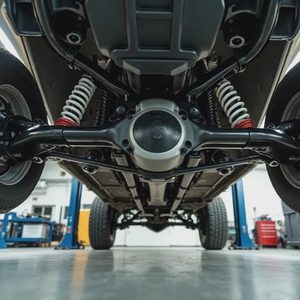
Start with a cold engine. Sellers who warm the Jeep before you arrive may be trying to hide a startup rattle, difficult crank, or warning light. Check the oil level and condition, then inspect the coolant reservoir for the correct color and signs of contamination. Look underneath for transmission fluid, oil, coolant, and transfer-case leaks. A dry skid plate can tell you more than a polished engine bay.
Next, scan every module with a capable diagnostic tool, not only the generic engine computer. The body, transmission, airbag, and suspension modules can store useful fault information. Do not clear codes before the scan. If the check-engine light is off but the monitors are not ready, the battery may have been disconnected recently. That is not proof of fraud, but it is a reason to stop and ask questions.
Then drive it long enough to reach operating temperature. Watch the transmission for delayed engagement, harsh downshifts, or a flare between gears. At parking-lot speed, turn tightly in both directions and listen for clicking from the front axles. On a straight road, the steering should not wander or require constant correction. Feel the brake pedal for pulsation and inspect the tire wear; cupped or uneven tires can point to worn suspension parts or a poor alignment.
What year jeep grand cherokee to avoid when the records are missing
A documented 2012 can be a better buy than an undocumented 2017. I would rather see dated oil-change invoices, transmission service records, and receipts for cooling-system work than a folder containing only a recent detail bill. Ask for the VIN and run a history report, but do not mistake a clean report for a mechanical inspection. Not every accident, flood exposure, or skipped service enters a database.
Look closely at the front subframe, rocker panels, brake lines, and suspension mounts if the Jeep lived where roads are salted. Surface rust on a fastener is normal; heavy scaling, flaking metal, or freshly sprayed undercoating deserves attention. A used Grand Cherokee from a dry western climate can still have seized bolts from trail use, so inspect the tow hooks, skid plates, and differential covers for impact marks.
I checked. The test drive and scan are where the purchase usually gets decided. If the seller refuses an independent inspection, walk away. Paying a shop $150 to $250 for a pre-purchase inspection is cheap compared with diagnosing a network of electrical faults after the title changes hands.
Better years are still not maintenance-proof
Later WK2 models, including many 2015 through 2020 examples, often benefit from updates and more refined equipment, but “later” does not mean trouble-free. The 3.0-liter EcoDiesel has its own maintenance and emissions-system considerations. The 3.6 V6 still needs oil changes, cooling-system attention, and inspection for leaks. The 5.7 Hemi still rewards a buyer who verifies service instead of trusting a seller’s claim that the engine is bulletproof.
A 2018 with 140,000 neglected miles can be a worse purchase than a 2013 with 95,000 carefully documented miles. Check recalls by VIN, confirm that recall repairs were completed, and price tires, brakes, battery, and fluids before negotiating. On a four-wheel-drive model, verify that all four tires are closely matched in size and tread depth. Mismatched tires can place unnecessary stress on the drivetrain.
How I would price the risk
Before buying, leave room for an immediate baseline service. Budget roughly $500 to $1,200 for fluids, filters, inspection items, and basic wear parts, depending on what the vehicle needs. If it has air suspension, electronic 4WD controls, or a Hemi with a noisy exhaust manifold, keep a larger reserve. A tempting $10,000 purchase can become a $13,000 vehicle before registration, insurance, and the first tank of fuel.
Get an insurance quote using the actual VIN before you buy. Safety equipment, engine size, location, driver history, and repair costs can move the premium, and the difference between a V6 and a Hemi is not always reflected in the seller's price. Compare liability limits, comprehensive and collision deductibles, and roadside coverage rather than choosing only the lowest monthly number.
My answer from the shop floor
So, what year jeep grand cherokee to avoid? I would be most cautious with 2011 through 2014 examples that have no records, warning lights, rough shifting, unexplained battery drain, or air-suspension faults. I would not reject every one of them. I would reject the one that cannot survive a cold start, full scan, lift inspection, and honest road test.
If you want the least complicated purchase, find the newest clean, documented vehicle your budget supports, preferably without modifications and with a conventional suspension setup. Keep cash available for the first repairs, inspect before signing, and do not let a low asking price rush your judgment. Coffee can be roasted too dark to save it, and a used Jeep can be polished too hard to hide what is underneath. The bolt doesn't lie.
No letters yet — pray write the first.