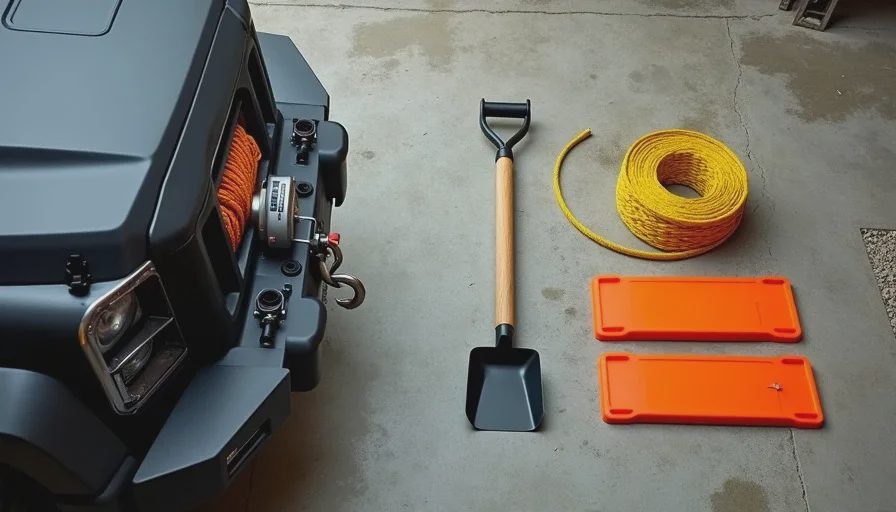
I've been building off-road trucks for 20 years. I've taken customers through Moab, the San Juan Mountains, and the trails around Silverthorne. In all that time, I've used a winch exactly four times.
Four times.
Meanwhile, I've removed winches from at least 30 trucks that never left pavement. The owners installed them because the internet told them they needed one. They spent $800 to $1,200 on a winch, plus a bumper to mount it, plus wiring, plus a solenoid relocation kit. All that weight hanging over the front axle. All that money spent on something they'll never use.
Here's the truth: you don't need a winch. You need a shovel and a friend with a tow strap.
Why Everyone Thinks They Need a Winch
The marketing is effective. You see a truck in an ad, stuck in mud up to the axles. The winch cable is strung to a tree. The truck is pulling itself out. It looks like the solution to every problem.
The forums reinforce it. "Better to have it and not need it than need it and not have it." "Winch is the most important recovery gear." "Don't go off-road without one."
But here's what the marketing doesn't show you. The weight. The installation. The maintenance. The electrical draw. The fact that most people will never, ever be in a situation where a winch is the only solution.
The Weight Problem
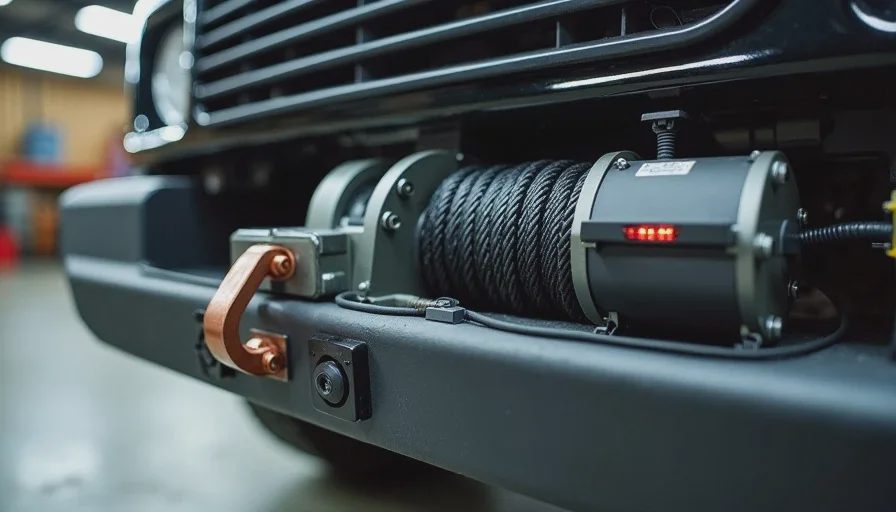
A typical 12,000-pound winch weighs 80 pounds. Add the synthetic rope (10 pounds), the mounting plate (15 pounds), and the fairlead (5 pounds). You're looking at 110 pounds hanging over the front axle.
That 110 pounds is on your front springs every mile. It's being controlled by your front shocks every bump. It's affecting your steering geometry every turn. It's reducing your approach angle because the winch bumper sits lower.
On a daily driver, that weight is a constant penalty for a capability you'll almost never use.
The Electrical Problem
A winch draws 400+ amps under full load. That's more than your alternator can supply. You need a dual battery setup or a high-output alternator to support it. That's more weight and more cost.
If you don't upgrade your electrical system and you use the winch under load, you'll drain your battery. Then you're stuck with a dead truck and a winch you can't use.
What Actually Works
In 20 years of off-road driving and recovery, here's what I've actually used:
A Shovel
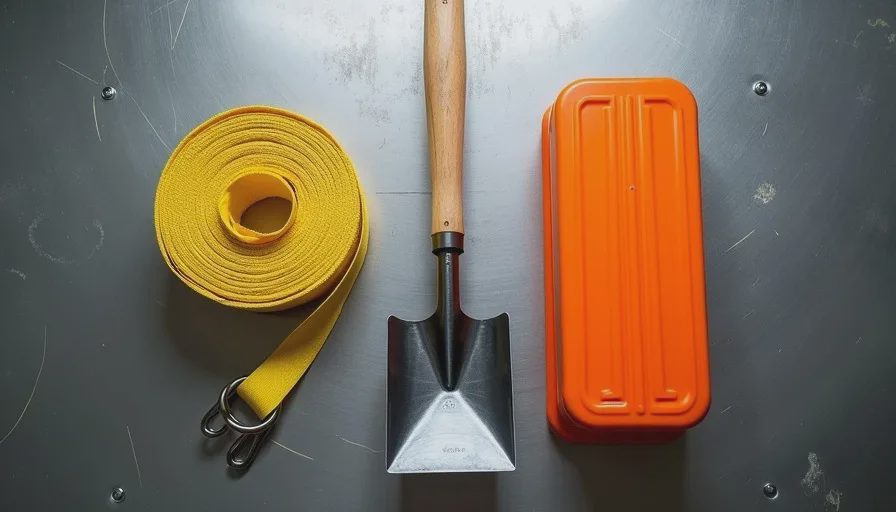
I've dug more trucks out of mud, sand, and snow than I can count. A good shovel is $40. It weighs 5 pounds. It doesn't draw 400 amps. It doesn't require maintenance. It works every time.
When you're stuck, the first step is always the same: assess the situation. If you're high-centered, you need to dig. If you're in soft sand, you need to air down. If you're in snow, you need to clear the snow from under the chassis.
A shovel does all of that. A winch doesn't.
A Tow Strap
I've been recovered more times than I've used a winch. A buddy in another truck with a quality tow strap can get you out of almost any situation. In 20 years, I've never been in a spot where a tow strap couldn't reach.
Cost: $60 for a good 30-foot recovery strap with loops. Weight: 5 pounds.
A Friend
This is the most important piece of recovery gear. If you're off-roading alone, you're making a mistake. Always wheel with another truck. One truck can recover the other with a tow strap. Two trucks together have double the options.
Traction Boards
These are the new hot thing. Plastic boards you put under the tires. They work better than you'd think. Cost: $150 to $300. Weight: about 15 pounds for a set. No electrical draw. No maintenance. Much cheaper than a winch.
When a Winch Actually Makes Sense
I'm not saying winches are useless. They have a place. Here's when I recommend them:
Serious Rock Crawling
If you're on difficult rock trails where a tow strap won't reach, a winch is essential. But that's a niche. Most people aren't doing trails that require a winch.
Overlanding in Remote Areas
If you're driving through areas where you might not see another truck for days, a winch is good insurance. But you also need the supporting gear: anchor points, tree straps, recovery rings, and the knowledge to use them.
Solo Exploration
If you insist on wheeling alone, you need a winch. But I'd rather see you bring a friend.
Snow Recovery
In deep snow, a winch can be useful. But a shovel and some traction boards will get you out of 80% of snow situations.
The Winch Tax
Here's what a winch actually costs you:
Item | Cost |
|---|---|
Winch (12,000 lb, quality brand) | $800 |
Winch bumper or mounting plate | $400 |
Wiring and solenoid relocation | $150 |
Synthetic rope upgrade | $150 |
Tree strap and recovery ring | $100 |
Installation labor | $300 |
Total | $1,900 |
Add the weight penalty on your springs and the constant fuel economy hit. Add the maintenance: you need to exercise the winch monthly, check the rope for abrasion, and keep the solenoid clean.
All of this for something you'll use once every five years.
The Rule: Wheel First, Buy Later
Here's my advice, and it's the same advice I give every customer.
Wheel your truck stock for a year. Go on trails. Push it. See what you actually need.
If you get stuck in mud, you need tires, not a winch.
If you high-center, you need clearance, not a winch.
If you can't get traction, you need a locker or traction boards, not a winch.
If you're constantly getting into situations where a tow strap can't reach, you're driving trails that are too advanced for your skill level.
After a year, if you've honestly needed a winch three times, buy one. But you won't.
Most people figure out that a shovel, a tow strap, and a buddy are enough.
The bolt doesn't lie. And a winch you never use is just expensive weight on your front axle.


No letters yet — pray write the first.