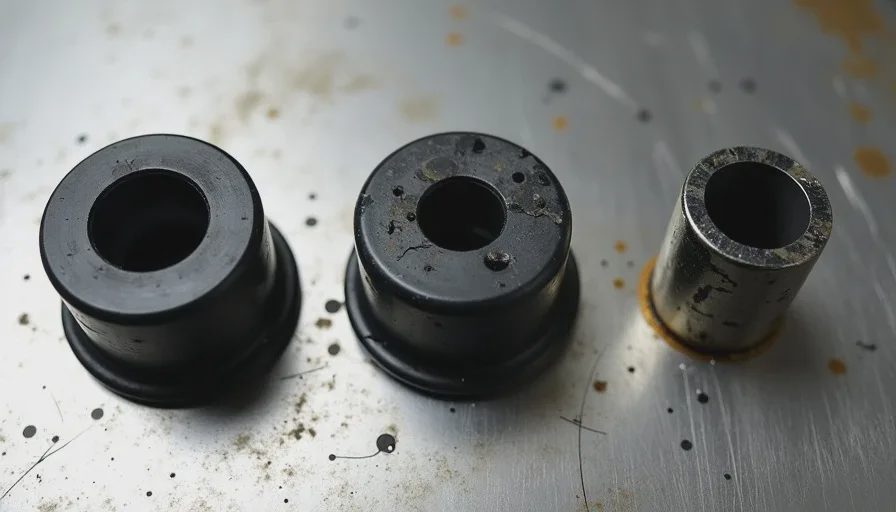
I pulled a track bar off a 2015 Ram 2500 last week. The customer was complaining about a clunk when turning. Nothing severe—just a slight noise when he backed out of his driveway.
The track bar bushing at the axle side had 60,000 miles on it. It was worn. But it wasn't destroyed. It was a perfect example of normal wear.
I've seen track bar bushings in every condition imaginable. Here's what good, worn, and dangerous bushings look like—with photos from my bench.
The Track Bar Bushing: What It Does
The track bar connects the axle to the frame. Its job is to keep the axle centered under the truck. When the suspension moves up and down, the track bar pivots on its bushings. Those bushings take a lot of load.
A worn bushing allows the axle to shift side to side. That shift changes the steering geometry. It can cause death wobble, bump steer, and uneven tire wear.
The Three Stages of Bushing Life
Stage 1: New (0-30,000 miles)
The bushing is tight. The rubber is intact. There's no visible deflection. When you grab the track bar and push, there's zero movement.
Stage 2: Normal Wear (30,000-80,000 miles)
The rubber shows signs of compression. There may be small cracks on the surface. The bushing has some give, but it's still holding the axle in position. A small amount of movement is normal—about 1/8 inch.
Stage 3: Failed (80,000+ miles or extreme use)
The rubber is cracked, torn, or separated from the sleeve. The bushing has excessive play—over 1/4 inch. The axle shifts under load. The truck clunks, wanders, and may develop death wobble.
What Normal Wear Looks Like
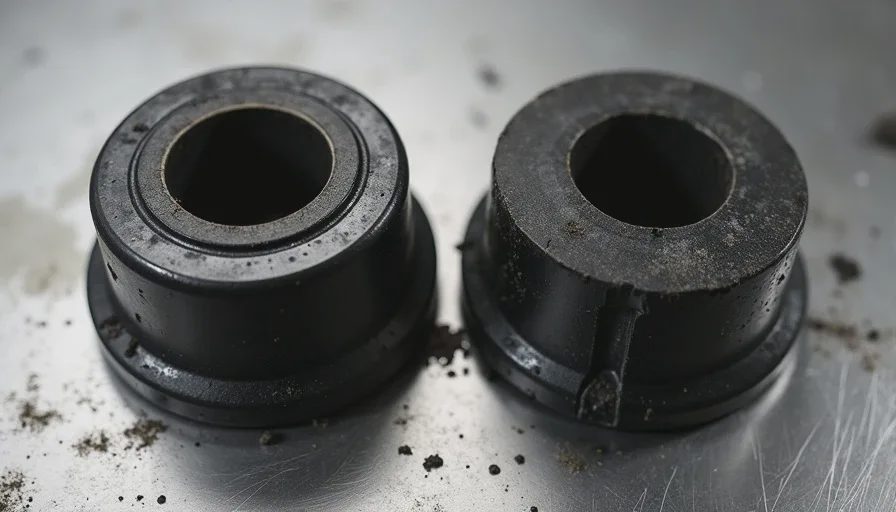
The bushing I pulled from the Ram had 60,000 miles. Here's what I observed:
Rubber surface: Visible compression marks where the sleeve had been pressing against the rubber. The surface was slightly flattened.
Cracking: Small surface cracks, less than 1mm deep. These are normal. They're from the rubber flexing and the weather exposure.
Sleeve fit: The metal sleeve was still snug in the bushing. No play between the sleeve and the rubber.
Movement test: When I clamped the bushing and applied moderate force, there was about 1/8 inch of deflection. That's normal for this mileage.
Tear-down inspection: No separation between the rubber and the metal sleeve. The bond was still intact.
When Normal Wear Becomes a Problem
60,000 miles of normal wear is fine. It doesn't need replacement yet. But here's when you should replace it:
The clunk is getting worse: If the sound is increasing, the bushing is deteriorating faster than it should.
You're seeing tire wear: Uneven tire wear can be a sign that the axle is shifting.
You're lifting the truck: A lift kit changes the track bar angle. A worn bushing will wear out faster at the new angle.
You're installing oversized tires: Bigger tires add more load to the bushing. Replace it before the extra load destroys it.
You're doing other front-end work: If you're replacing ball joints or tie rods, do the track bar bushing at the same time. It's cheap and it saves labor later.
What Dangerous Bushings Look Like
I've seen track bar bushings in terrible condition. Here are some photos from my archives:
The Separated Bushing
The rubber separates from the metal sleeve entirely. The track bar moves freely side to side. This truck had a death wobble that the customer had been trying to fix for six months. New bushings fixed it in an hour.
The Wallowed-Out Bushing
The rubber is completely destroyed. There's a gap between the sleeve and the rubber big enough to stick your finger in. This bushing had 120,000 miles on a lifted truck. The customer said it had been clunking for two years.
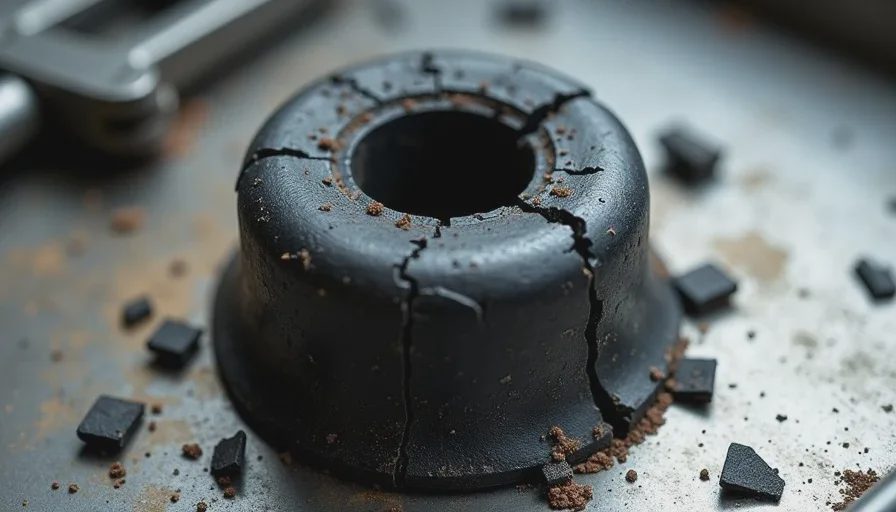
The Cracked Bushing
Deep cracks run through the rubber. You can see the cracks from the outside. When you remove the bushing, the rubber falls apart. This happens in dry climates where the rubber dries out and cracks.
The Diagnostic Test
Here's how I check track bar bushings:
Put the truck on the ground. Don't test bushings with the suspension hanging. The load changes everything.
Have someone turn the steering wheel back and forth. About a quarter turn each way. Engine off.
Watch the track bar bushing at the axle. Look for movement. A small amount of bushing deflection is normal. The bushing flexing is the bushing doing its job.
Watch the bolt. If the bolt itself moves, the bushing is worn. A tight bushing will allow the rubber to flex but not the bolt to shift.
Push the track bar from the side. Grab the bar and push. If you feel movement, the bushing is failing.
Check for play. If the axle shifts more than 1/4 inch, replace the bushing immediately.
Replacement Cost
A track bar bushing costs about $40. Labor is about 1 hour. Total cost: under $200.
Compare that to the cost of a death wobble diagnosis or the damage a loose track bar can cause to your ball joints, tie rods, and steering gear. $200 is cheap insurance.
The Rule: Replace Before It Fails
I replace track bar bushings proactively on every truck I work on that has over 80,000 miles. It's a $40 part. It takes an hour. It prevents a lot of problems.
If you wait until it fails, you're looking at:
A death wobble that makes the truck unsafe
Potential damage to other steering components
A more expensive repair
A potentially dangerous situation on the highway
The bolt doesn't lie. And a track bar bushing that's past its prime tells you before it fails—if you're listening.



No letters yet — pray write the first.