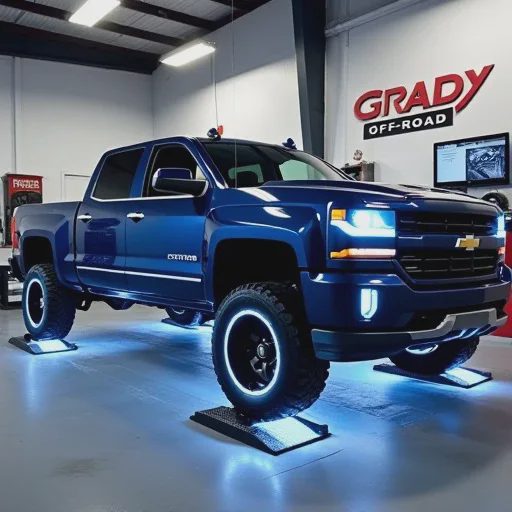
The phone call was short. "Walt, my 2016 Silverado pulls right. I've done three alignments. It still pulls right."
I told him to bring it in. It's a common complaint. Usually it's a bad tire, a stuck brake caliper, or a bent front-end component. This time it was something else entirely.
The customer was right about the symptom. The truck pulled hard to the right at highway speed. The steering wheel was straight, but the truck wanted to go right. Three alignment shops had checked the front end and found nothing wrong. They'd even swapped tires front to back.
Nobody had looked at the rear axle.
How a Rear Axle Causes a Pull
Most people think a pull is always in the front. Not true. If the rear axle isn't pointed straight, the truck has to turn the steering wheel to compensate. The front wheels keep the truck going straight, but the rear axle is pushing the truck to one side. The result is a pull that no front-end alignment will fix.
This is called a thrust angle problem. The rear axle is supposed to be perpendicular to the vehicle's centerline. If it's angled even a few degrees, the truck will track wrong.
The Alignment Rack Told the Story
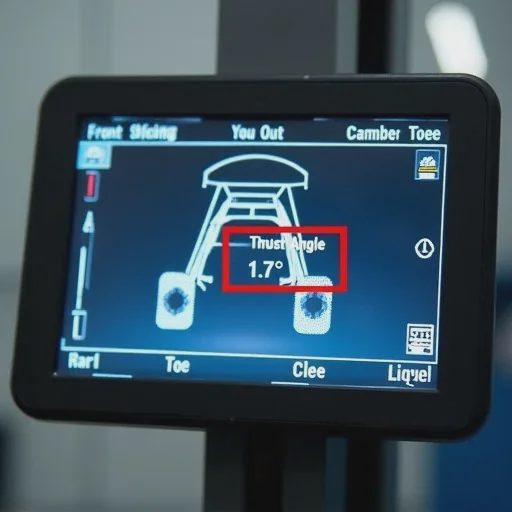
I put the Silverado on my Hunter alignment rack. The front numbers were perfect. The customer wasn't lying. Then I checked the rear.
The thrust angle was off by 1.7 degrees. That's enough to cause a significant pull at highway speeds. The rear axle had shifted toward the driver's side by about half an inch.
Finding the Cause
Here's where I started looking:
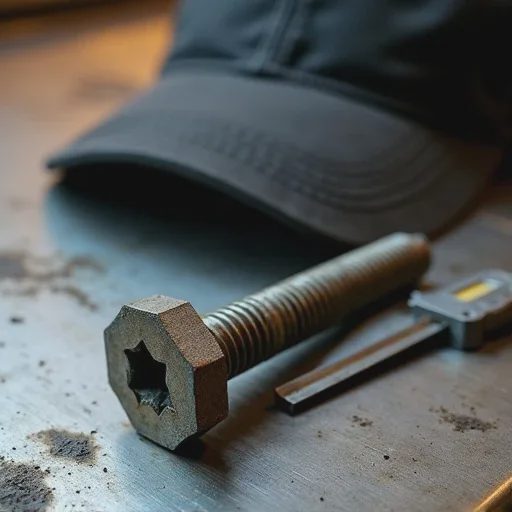
Leaf spring center pins: These are the bolts that locate the axle on the leaf springs. On the Silverado, the driver's side center pin was sheared. The axle had shifted rearward on that side, changing the entire wheelbase. That shift also angled the axle relative to the frame.
Leaf spring bushings: The front bushings on both sides were worn. There was visible play. Not enough to fail inspection, but enough to let the axle move under hard braking or acceleration.
U-bolts: I checked the torque on the U-bolts. Three of the four were undertorqued. One was only 60 ft-lbs. It should be at least 85.
The Chain Reaction
Here's what happened. The undertorqued U-bolts let the axle shift slightly over time. The worn bushings didn't hold the axle in position. The center pin sheared when the axle moved too far during a hard stop. Once the center pin was gone, the axle couldn't stay in alignment. The truck started pulling right.
The Fix
I don't replace parts without understanding the failure. Here's what I did:
Lowered the axle: Unbolted the leaf springs, dropped the axle out of the way.
Replaced the center pins: New Grade 8 bolts. Torqued to spec.
Replaced the leaf spring bushings: Fresh polyurethane bushings on all four ends. The factory rubber units were 60,000 miles old. They were due.
New U-bolts: I never reuse U-bolts. They stretch and lose their clamping force. New set, torqued to 85 ft-lbs in a criss-cross pattern. Then I re-torqued them 100 miles later.
Re-alignment: Put the truck back on the rack and aligned the rear axle. The thrust angle came back to zero degrees.
The Test Drive
I took it down I-70 for a test drive. No pull. Straight as a string at 75 mph. The customer picked it up that afternoon. I told him exactly what happened and why. He looked at me like I'd just performed magic.
What You Should Check on Your Truck
Before you pay for another alignment, or before you blame your front suspension for a pull, do this:
Measure tire pressure first. It's the cheapest fix. One tire that's 5 psi low causes a pull.
Rotate tires front to back. If the pull changes direction, it's a tire.
Check the rear axle position. Look at how the axle sits on the leaf springs. The center pin should be visible through the locating hole in the spring plate. If it's off-center, the pin is probably sheared.
Torque your U-bolts. This takes 10 minutes. 85 ft-lbs on most half-ton trucks. Check the spec for your model.
Look at the leaf spring bushings. If you see rubber cracking or gaps around the bushing sleeve, they're worn. Replace them before they cause bigger problems.
How This Would Have Looked in a Forum
If this customer had posted on a forum, he'd have gotten 20 replies telling him to replace his steering rack, his tie rod ends, and his front wheel bearings. He'd have spent $1,000 and still had a pull. Nobody would have said "check your rear axle."
This is why I write. The internet is full of blind guesses. A real shop diagnosis is methodical. It follows the evidence. It checks the front, then the rear. It measures, then it fixes.
The bolt doesn't lie. Neither does a thrust angle reading.


No letters yet — pray write the first.