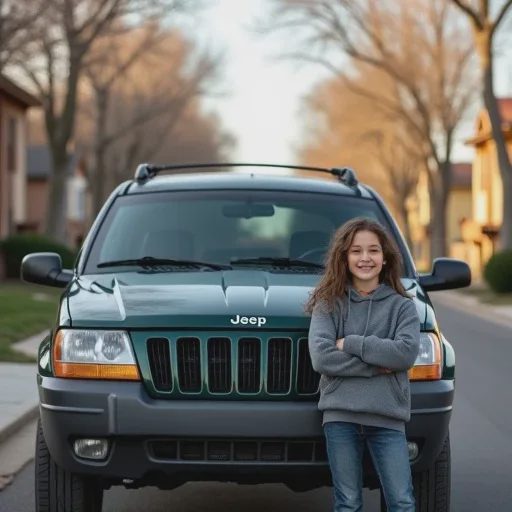
She'd been dropping hints for six months. "Dad, I found a Wrangler on Craigslist for $5,000." "Dad, my friend Sarah's brother has a Tacoma he'd sell." "Dad, I really don't want to learn on a sedan."
Linda and I had already talked about it. Emma was going to be driving in a year and a half. We could buy her something safe and boring. Or we could build her something safe and right. I chose the second one.
The day we found the WJ, I got a text from a guy in Denver. 2004 Grand Cherokee. 178,000 miles. 4.0L inline-six. Four-wheel drive. Stock. No lift. No modifications. Just a beige, faded, tired SUV that had spent its life commuting to a cubicle in the suburbs.
The price was $3,200. I texted back: "I'll come see it today."
Why a WJ Grand Cherokee
I picked the WJ for three reasons. First, the 4.0L inline-six is bulletproof. It's not fast and it's not fuel-efficient, but it will outlast the chassis. Second, the WJ has a solid front axle and a coil-spring rear. It's a real four-wheel-drive platform, not a crossover. Third, it's simple. No computers that fight you. No overcomplicated suspension that needs a dealership computer to align. Emma's going to learn how her truck works, and a WJ is a great place to start.
The other option was a third-gen 4Runner. They're great trucks. But the Toyota tax is real. A comparable 4Runner would have cost us $6,500 with more miles and worse rust.
The Day We Bought It
Emma came with me to Denver. I wanted her to see the process, not just get the keys. We met the seller in a Home Depot parking lot. The guy seemed decent—he'd owned it for eight years, had the service records, and had replaced the alternator and water pump in the last 20,000 miles.
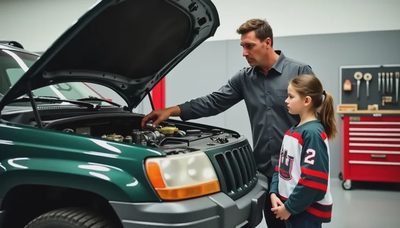
Emma walked around the WJ, doing exactly what I'd taught her. She kicked the tires. She checked the gaps on the panels. She opened the hood and stared at the engine like it was a puzzle she was trying to solve.
Her face when she saw the interior almost broke me. The seats were worn. The dashboard was faded. The headliner was sagging. She looked at me, and I could see the hesitation. "Dad, it's kind of rough."
I smiled. "It's a base. A good one. That's the point."
The Baseline Inspection
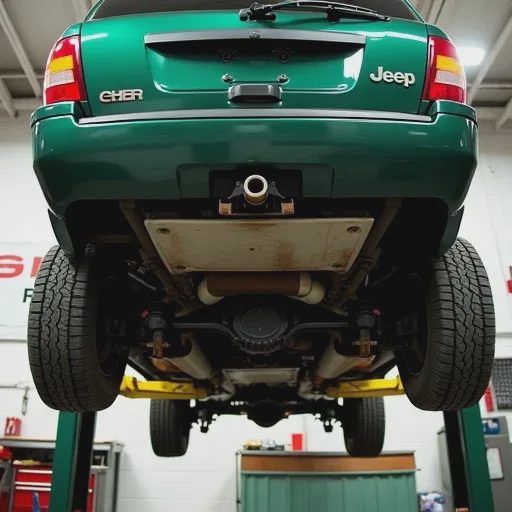
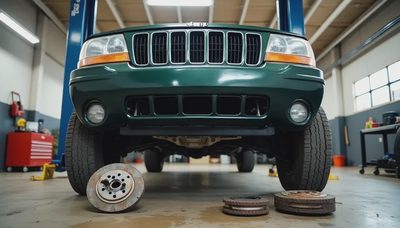
When we got it back to Silverthorne, I put it on the lift for a full inspection. Here's what I found:
Brake lines: Surface rust. Not enough to leak yet. I'll replace them before she drives it.
Ball joints: Tired but not loose. They'll last another 10,000 miles. I'm replacing them anyway.
Track bar bushing: Worn but intact. On the replacement list.
Tires: Mismatched. Two were from 2019. Two from 2016. All different brands.
Oil pan gasket: Leaking. Common on the 4.0L.
Rear main seal: Weeping. Also common. I'll monitor it.
Front axle U-joints: Dry, no play. Not great. Replacing them.
Cooling system: Original radiator. Plastic tanks are brittle at this age.
The Build Plan
Emma's Jeep isn't going to be a rock crawler. It's not going to have 35-inch tires or a 4-inch lift. It's going to be safe, reliable, and capable of getting her to school, hockey practice, and maybe some fire roads with her friends.
Here's the plan:
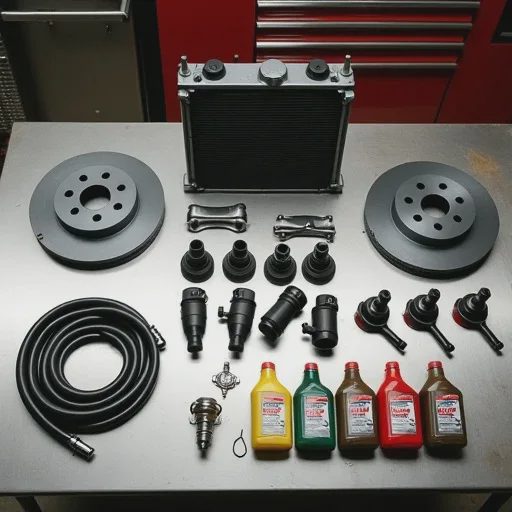
Brakes: New lines, new pads, new rotors. If it stops, it goes. Nothing else matters.
Suspension: OEM-style replacement on the springs and shocks. No lift. Stock ride height. I want her to learn how a stock truck handles before she learns how a modified one does.
Ball joints: New Spicer units. I'm not gambling on a tired joint at 70 mph.
Cooling: New radiator, new hoses, new thermostat. Overheating kills the 4.0L. This is cheap insurance.
Tires: Matching set of all-terrains. Nothing aggressive. Just something with tread depth she can trust in a Colorado snowstorm.
Fluids: Every single fluid in the truck gets drained and refilled. Engine oil, transmission fluid, transfer case, differentials, brake fluid, power steering, coolant.
The Conversation We Had
Emma asked me why I didn't buy her something newer. "My friends' parents lease cars," she said. "They get new ones every three years."
I told her the truth. "Emma, I could lease you a new car. It would be safer on paper. More airbags. More electronics. But you wouldn't know how it works. You wouldn't know why it stops or turns or goes. You'd just press buttons and hope."
"This WJ? You're going to know every bolt. You're going to know why the brakes squeak and what the engine sounds like when it's happy. You're going to know what maintenance matters and what you can ignore. That's worth more than a lease payment."
She thought about it. Then she said, "So I'm going to learn how to fix it?"
"You're going to learn how to take care of it. I'll do the heavy wrenching. But you're going to be there for it all."
The Timeline
We're not rushing this. Emma has 18 months until she gets her license. We're going to take two years to build it, drive it, and learn it.
Months 1-3: Baseline mechanical. Brakes, suspension, cooling, fluids, tires.
Months 4-6: Interior refresh. New headliner. Seat covers. Basic sound system.
Months 7-9: Paint correction and rust treatment. Not a full repaint, but enough to slow the Colorado winter salt.
Months 10-12: Emma's first off-road lesson. Stock truck, controlled terrain, recovery gear ready.
Months 13-18: Daily driving practice. All the parking lot drills. Highway merging. Winter driving in Silverthorne conditions.
What This Series Is About
I'm going to document every step. Every bolt. Every mistake. Every teaching moment.
I don't expect this to be fast or flashy. A slow build is the opposite of what you see on YouTube. But that's the point. My daughter is going to drive this truck. I'm going to make sure every torque wrench click is loaded with care, not performance.
The bolt doesn't lie. And when I torque a ball joint nut on Emma's WJ, I'm going to think about her every time.
No letters yet — pray write the first.