Cooper Discoverer all-terrain tires show up regularly in my Silverthorne shop, usually on half-ton pickups, Jeep Wranglers, Toyota Tacomas, and older 4Runners. Owners want one tire that can commute through February snow, survive a washboard forest road, and avoid sounding like a military convoy on the highway. That is a reasonable request. It is also where tire marketing gets slippery.
I have mounted enough sets to know where these tires make sense and where the internet gives them credit they have not earned. They are not mud tires, they are not magic snow tires, and they will not correct worn ball joints or a bent steering component. A good tire gives a sound truck more usable traction. It cannot turn a neglected truck into a reliable one.
What these tires are built to do
The Cooper Discoverer all-terrain lineup is aimed at mixed driving. Depending on the exact model and size, you get an aggressive-looking tread pattern, open shoulder blocks, reinforced construction, and a tread compound intended for pavement, gravel, dirt, and moderate snow. That balance is the point. The tread has enough void between blocks to clear loose material, while the center section remains connected enough for normal highway manners.
That makes them a sensible choice for a Tacoma that sees a daily commute and weekend trail access, or a Silverado that pulls a utility trailer during the week and visits a hunting road in October. They are less convincing for a truck that spends most of its time in deep mud, sharp shale, or heavily rutted terrain. For that job, a dedicated mud-terrain design provides more bite, though it also brings more noise, faster wear, and poorer wet-road behavior.
The first mistake I see is buying by sidewall appearance alone. A tire can look tough and still have a soft sidewall, a weak load rating for the application, or a tread pattern that fills with clay. Read the size, load index, speed rating, and severe-snow marking before admiring the letters on the sidewall.

How they behave on pavement and snow
On dry pavement, Cooper Discoverer all-terrain tires are generally easy to live with when properly balanced. They do not feel like highway tires, but a straight, correctly aligned truck should track without constant correction. Expect some tread hum as the miles accumulate. The sound usually becomes more noticeable after the tread develops uneven wear, which is often an alignment or rotation problem rather than a tire defect.
Wet pavement is where tread condition and pressure matter. New tires with healthy grooves can move standing water reasonably well, but no all-terrain pattern should be treated like a rain tire. I reduce speed before a wet downhill bend, not after the steering gets light. That habit has saved more trucks than a dramatic tread design ever will.
In packed snow, these tires can be useful, especially when the truck has functioning four-wheel drive and the driver uses smooth throttle inputs. The mountain-snowflake symbol, when present on the specific tire, indicates testing for severe snow service; it still does not make the tire equivalent to a dedicated winter tire. On ice, studs or a true winter compound remain in another category entirely.
I once had a customer blame his tires for poor snow performance on a Wrangler. The tread was fine. The front axle had a leaking vacuum disconnect, and only one front wheel was pulling. I checked. The bolt doesn't lie, and neither does a driveline inspection.
Trail performance and sidewall reality
On gravel and maintained forest roads, the Cooper Discoverer all-terrain tires offer the kind of predictable grip most weekend drivers actually need. Lowering pressure modestly can lengthen the contact patch and soften the ride, but pressure changes must be made with a gauge and restored before highway travel. I do not recommend guessing by looking at the sidewall bulge.
For rocky trails, inspect the sidewalls before committing to a long route. Look for cuts, exposed cords, and bruising near the bead. A larger tire does not automatically mean a stronger tire. Construction, load range, wheel width, and inflation all work together. A heavy-duty E-load tire on a light SUV may survive abuse, but it can also ride harshly and transmit more impact into control arms, wheel bearings, and steering joints.
That tradeoff matters on older vehicles. If your 2007 Wrangler already has loose tie-rod ends, adding a heavier tire can make the steering shake arrive sooner. Fix the play first. Then align it, balance it, and recheck the lug nuts after the first 50 to 100 miles. I use a torque wrench, not the impact gun's guess.
Choosing a size without creating problems
The safest tire size is the one that fits the suspension, wheel, brakes, and spare location without a chain of corrective modifications. Cooper Discoverer all-terrain tires are available in common truck and SUV sizes, but availability does not mean every size belongs on every vehicle.
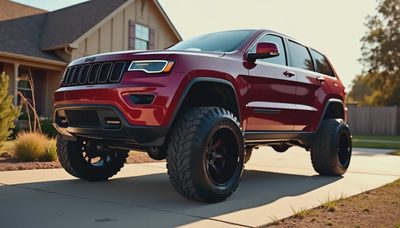
Before ordering, measure clearance at full steering lock with the suspension compressed. Check the inner sidewall against the upper control arm, inspect the rear wheel well, and verify that the spare can be raised into place. On a lifted truck, measure again after the lift settles. A tire that clears on a shop lift may rub when the front axle stuffs into a rock.
Moving from a 265/70R17 to a wider or taller size can change gearing, braking feel, speedometer accuracy, and fuel consumption. The change may be worthwhile, but calculate it rather than copying a forum signature. A 33-inch tire is not just a fashion decision; it adds rotating mass and leverage at the wheel bearings.
A practical inspection checklist
Before buying, read the door-jamb tire placard and compare its required size and pressure with the tire's load information. Confirm the wheel diameter and width, then ask whether the tire's load range matches the truck's actual use. If you tow, include trailer tongue weight and cargo rather than judging by the empty truck in the driveway.
After installation, check that all four tires have equal cold pressure unless the vehicle specifies otherwise. Inspect for rubbing with the wheel turned both directions. Drive at neighborhood speed first, then recheck balance on a smooth road. After the first trip, examine the tread for feathering, the sidewalls for scuffs, and the lugs for anything unusual.

Tread life, rotation, and the money question
Cooper Discoverer all-terrain tires can deliver respectable service when rotated on schedule and mounted on a truck with sound alignment. I prefer checking them every oil change instead of trusting a calendar. Uneven wear across the inner shoulder often points to toe or camber trouble. Cupping can indicate worn shocks, a loose bearing, or poor balance. Rotation hides these clues for a while, but it does not repair them.
A typical set can cost several hundred dollars before mounting, balancing, taxes, and disposal fees, with larger load-range sizes pushing higher. Compare the complete installed price, not just the online tire listing. A bargain disappears quickly if a local shop charges extra for heavy-duty balancing or if the tire requires a second trip because the chosen size is backordered.
I also compare the cost against the truck's condition. Spending $900 on tires for a vehicle with failing ball joints is backwards. Spend first on the part that controls the wheel, then buy the tire that supports the job. Tires are the contact patch, not a substitute for maintenance.
My shop verdict
The Cooper Discoverer all-terrain tires make sense for drivers who split time between pavement, snow-covered roads, gravel, and moderate trails. They offer a practical middle ground without forcing every trip to sound like a tire test. I would choose them for a maintained Tacoma, half-ton pickup, or daily-driven Wrangler when the size and load rating match the vehicle.
I would look elsewhere for constant mud, extreme rock crawling, or maximum ice performance. I would also postpone the purchase if the truck has steering play, bad wheel bearings, bent wheels, or an alignment that cannot hold specification. Cooper Discoverer all-terrain tires can give a healthy truck useful traction. They cannot hide a mechanical problem for long.
Buy the correct size, set pressure with a gauge, inspect the hardware, and rotate before the wear pattern gets ugly. The bolt doesn't lie.


No letters yet — pray write the first.