I was under a 2012 JK chasing a death wobble that turned out to be the ball joints, not the track bar. Before I installed the replacements I needed the torque sequence and values off my phone. Every pair of gloves I owned forced the same interruption: peel them off, wipe the grease, unlock the screen, put them back on. That cycle repeats across most diagnostic and assembly jobs in a two-bay shop. After twenty years of this work I stopped treating it as a minor annoyance and bought a pair of JUMPHIGH utility gloves for $9.99. I used them on the ball-joint job, then on control-arm sorting and the brake-line check on Emma’s 2004 WJ. They stayed in the rotation.
I do not judge a shop glove by the marketing copy. I judge it by what I can still do with it under a truck after the grease is already on my hands. I tested this pair against that standard, with touchscreen use being one of the things I cared about most.
🛒 Check Price & Reviews on Amazon
What These Gloves Are Built For
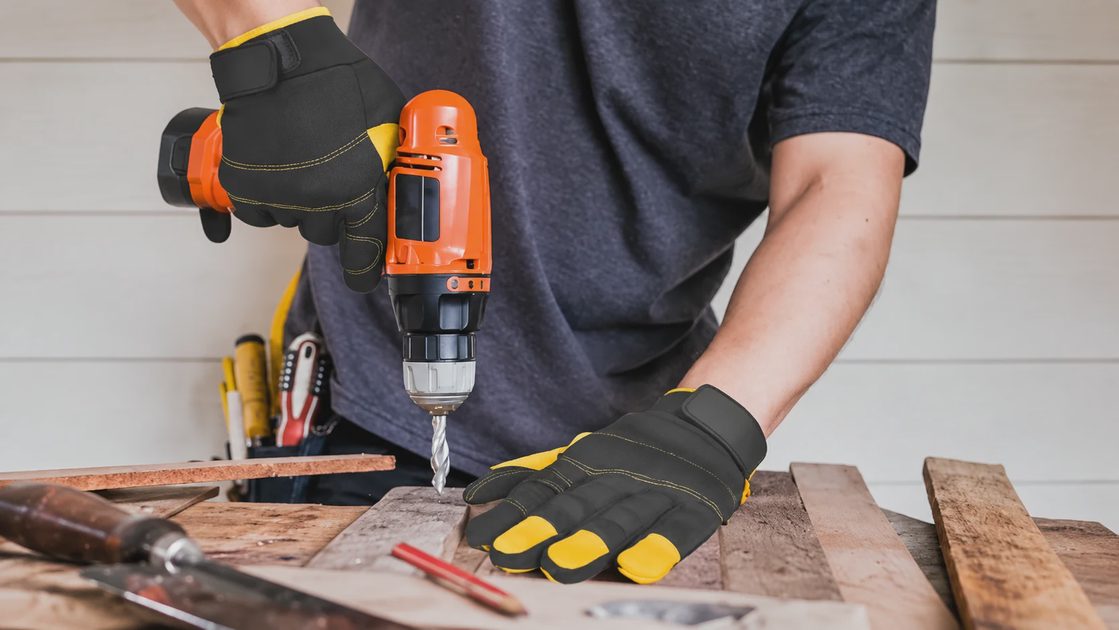
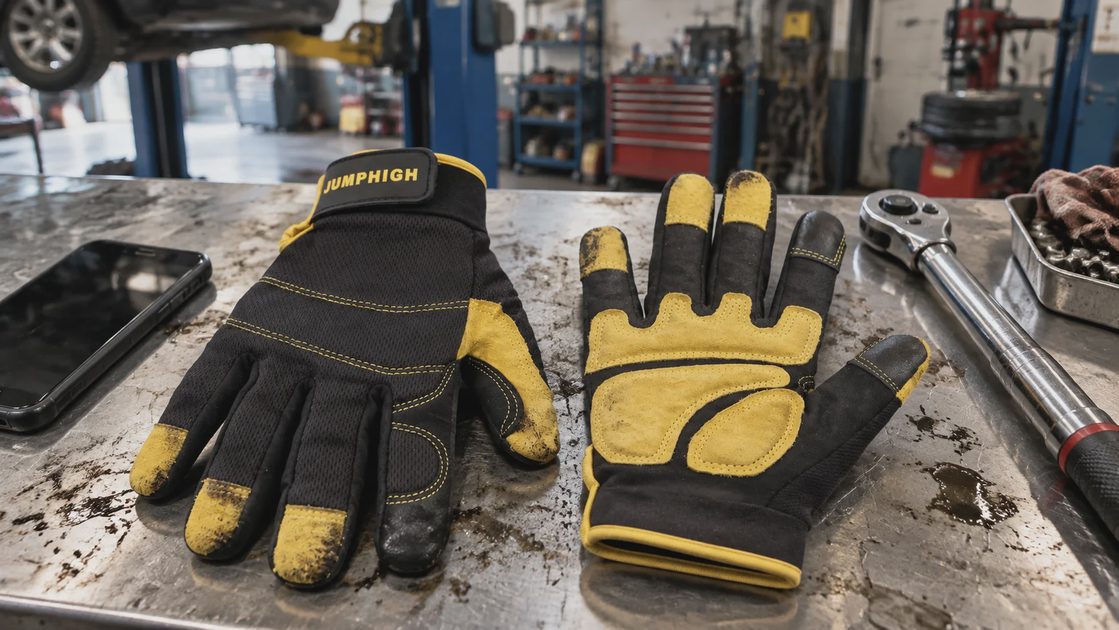
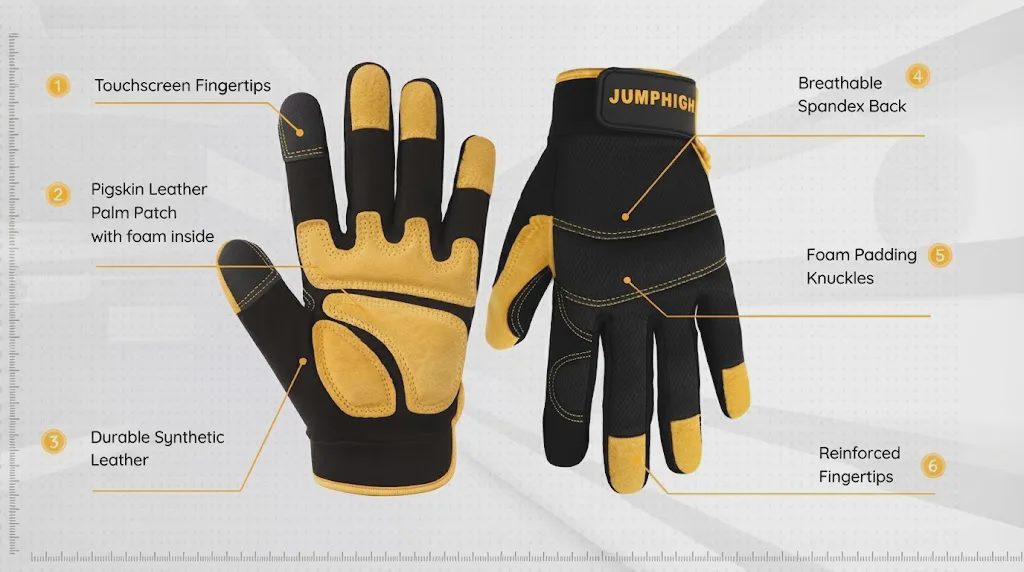
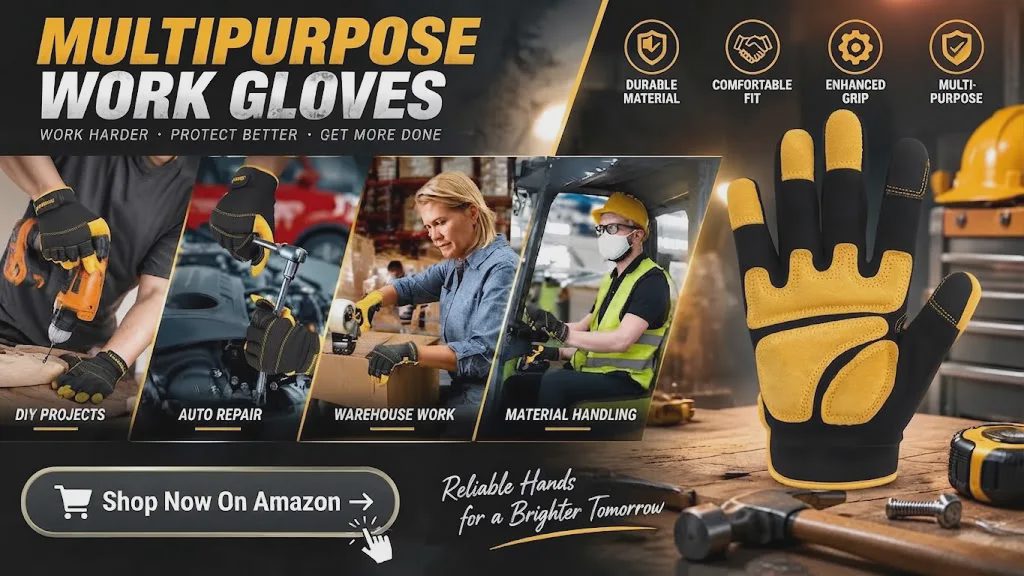
The JUMPHIGH pair is a medium utility mechanic glove. Synthetic leather covers the palm and high-wear zones. Stretch spandex forms the back of the hand. Reinforced fingertips and a foam-backed palm patch sit where tools and metal contact most often. Light foam padding covers the knuckles. An adjustable hook-and-loop cuff keeps them secure. Touchscreen capability is built into the fingertips. They are machine-washable in cool water and should be air-dried to hold their shape. Nothing here is decorative — every panel sits where a wrench, a rusted bolt, or a dropped part tends to land.
These belong in the light-to-medium shop-work category that still requires phone or tablet access. That means diagnostic checks, parts sorting, light wrenching, and any job where you need to look something up mid-task. Heavy grinding, continuous solvent exposure, and true impact protection sit outside that category. Knowing where that line falls is what keeps a glove in the rotation instead of at the bottom of a drawer. A glove that's honest about its limits gets reached for more often, not less, because you stop guessing whether it'll hold up.
How They Performed on Actual Jobs
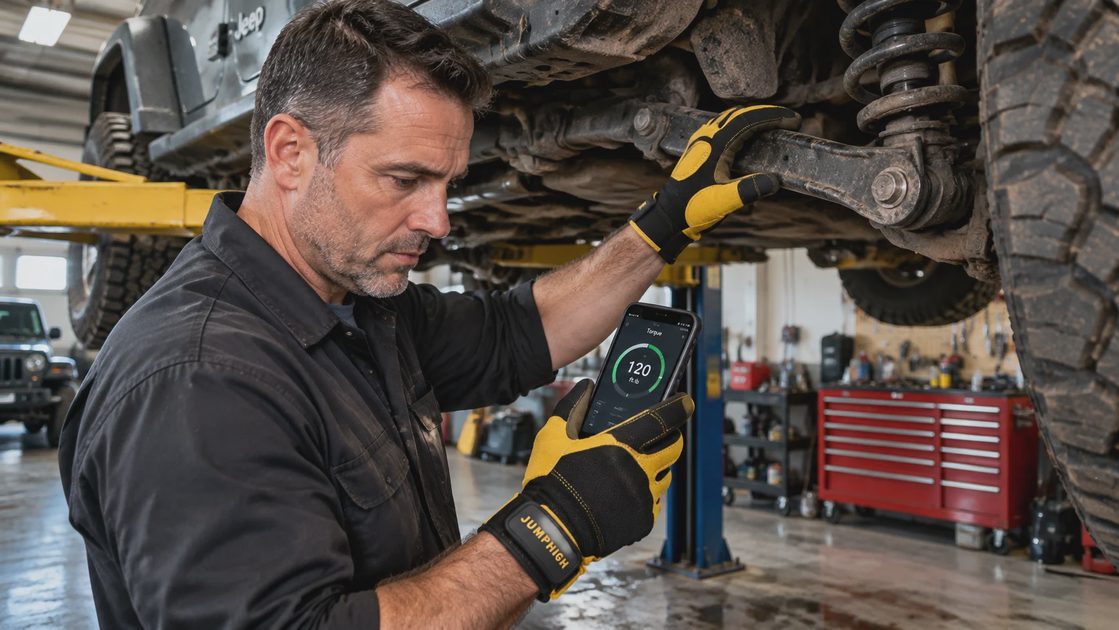
The first test was the same JK ball-joint job. I needed to confirm the sequence and torque numbers on a PDF. With the gloves on I could scroll, zoom, and tap without removing them. The conductive tips registered consistently enough for that task. Precision typing remained slower than bare fingers.
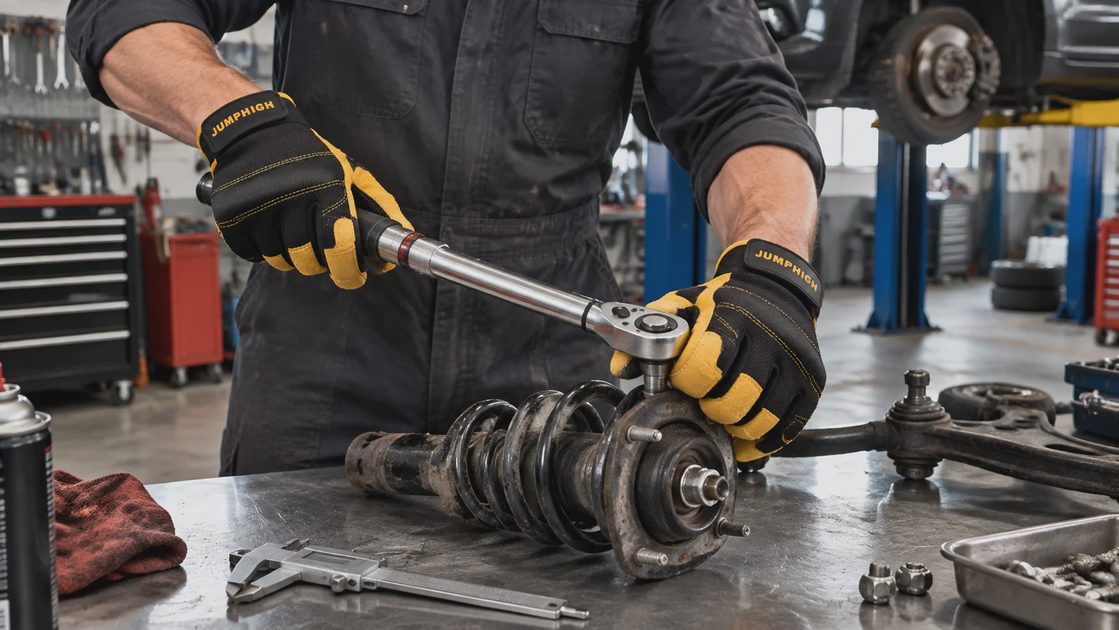
Dexterity was the next measurement. I needed to pick up small cotter pins and feel the difference between a tight and a loose castle nut while operating a torque wrench. The stretch back allowed enough finger movement that those tasks stayed practical. The palm grip held on greasy tools without the glove fighting the handle.
Breathability showed up on a warm afternoon with the bay doors open. After roughly two hours of continuous work my hands stayed reasonably dry and the gloves did not stiffen with sweat. That same pair went under Emma’s 2004 WJ while I checked brake lines and ball joints before the first parking-lot drive. I could keep one glove on, pull the phone, and compare a line photo to the current condition without the usual bare-hand fumble. I wanted the gloves to work without getting in the way before I put the Jeep back on the road with her driving it.
In a multi-vehicle day the interruptions compound. One truck needs a torque confirmation. Another needs a photo of a worn bushing sent to the supplier. A third needs a part-number search. Gloves that let you stay protected through those steps reduce the number of times grease ends up on the screen and on the next clean part.
Where the Limits Appear
These aren't heavy-duty gloves. The synthetic leather handles tool work, parts sorting, light wrenching, and measurement checks, but not constant abrasion, grinding, or heavy fab. Stitching holds up; the material has a clear ceiling.
The foam knuckle padding cushions light knocks, but doesn't replace an impact-rated glove under load.
I judge the limit by what's next: suspension work, keep them on; grinding, welding, sharp sheet metal, or solvent exposure, switch pairs. That's not a knock — just a different job.
Most of my day isn't grinding or welding. It's tools, hardware, measurements, service info, and part photos — exactly where these gloves fit.
Touchscreen handles scrolling, zooming, tapping, and photos; precision typing stays slower. If they stay wet, oil and water soak through. Air-dry after a cool wash; heat shrinks them.
For diagnostic and assembly work, those limits are easy to work around. For heavy abrasion, sharp metal, or serious impact, a different pair belongs in the drawer.
Where I’d Actually Use These
I keep them for jobs that sit in a specific band:
Confirming torque specs and service sequences on a phone or tablet
Light-to-medium suspension work—ball joints, control arms, track-bar hardware
Sorting fasteners and checking bushing play with a micrometer
Taking comparison photos of worn parts
Mixed tasks that move between a lift, a parts bench, and a screen
I leave them on the shelf for grinding, welding, continuous solvent exposure, and any job that demands certified cut or impact resistance. Those jobs need a different tool, and pretending otherwise is how hands get hurt. The $9.99 price buys capability inside the first list. It does not buy capability inside the second. That's not a flaw in the glove — it's just an honest limit, and knowing it is worth more than any marketing claim.
The Checklist I Use on Any Shop Glove
I have learned not to judge a shop glove by one good job. A pair can feel great for twenty minutes and become annoying after half a day. So before I keep a glove in the rotation, I look for the same few things every time: basic dexterity, useful touchscreen response, reasonable comfort, and enough durability for the work it is actually meant to handle.
Can I operate a phone or tablet without removing them?
Can I still pick up a cotter pin and feel a castle nut?
Do my hands stay reasonably dry after two continuous hours?
Does the palm survive normal tool contact for several weeks of regular use?
Can I wash them without shrinking or falling apart?
Does the cuff stay secure without cutting circulation?
That is enough for me to keep them in the rotation.
The Bottom Line
I bought these because the glove-on, glove-off cycle was costing time on every job that required a torque number, a service sequence, or a comparison photo. Every interruption added up: grease on the screen, grease on the next clean part, and a few extra seconds I never got back. At $9.99 the JUMPHIGH pair lets me keep my hands protected while still using a phone or tablet for the light-to-medium work that fills most days under a truck. They stay in the drawer next to the torque wrench because they remove one repeated interruption without adding new problems of their own.
The bolt doesn’t lie.


No letters yet — pray write the first.