The bf goodrich ko2 vs ko3 question usually starts with a truck owner standing beside a worn set of tires, phone in hand, wondering whether the newer tire is genuinely better or simply wearing a fresh label. I have mounted both at my shop in Silverthorne, Colorado. The short answer is that the KO3 is the better all-around design, but a discounted KO2 can still be the smarter buy for the right truck, terrain, and wallet.
That last part matters. A tire is not a suspension upgrade. It will not correct bad alignment, weak ball joints, or a driver who runs 12 psi on the highway because somebody on a forum said it improves grip. I start with the truck, the load, and the roads it actually travels. The bolt doesn't lie, and neither does a tire's wear pattern.
What changed from KO2 to KO3?
The bf goodrich ko2 vs ko3 comparison is mainly a story about refinement rather than a complete redesign. The KO3 keeps the familiar all-terrain shape but adds changes intended to improve durability, on-road manners, and traction on loose surfaces. Its tread blocks have more pronounced edges, the shoulder design is more aggressive, and the tread pattern is built to clear debris more effectively.
The KO2 already earned its reputation for tough sidewalls and reliable gravel-road performance. I have seen KO2 tires survive sharp shale that would have ruined cheaper highway all-terrains. However, the KO2 can become noisy as the tread wears, especially when rotation intervals get ignored. Some trucks also develop a familiar cupping pattern when worn shocks, loose tie rods, or incorrect toe alignment are hiding underneath.
The KO3 is designed to address some of those complaints. It uses a newer tread compound and updated tread geometry, with BFGoodrich emphasizing chip-and-tear resistance and improved traction in mud, gravel, and snow. That does not make it a mud tire. It makes it a more carefully balanced all-terrain tire.
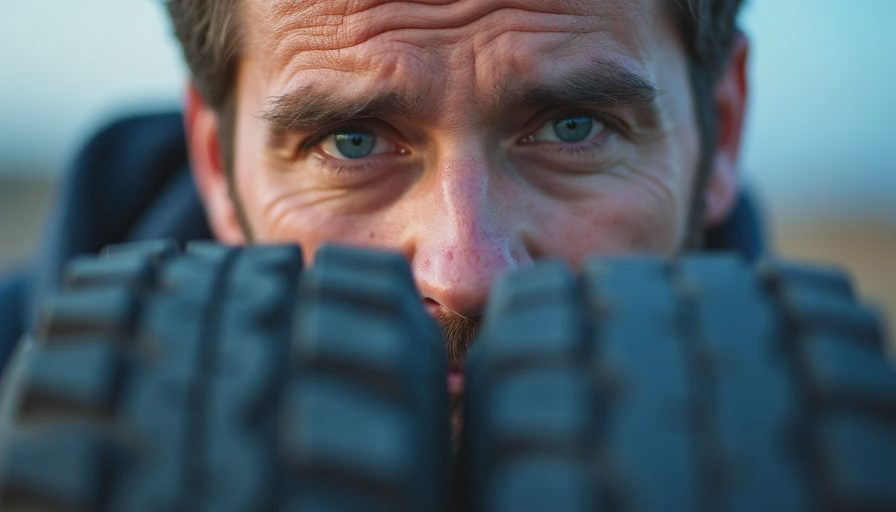
Snow, rain, mud, and rock performance
For the bf goodrich ko2 vs ko3 decision, snow is where many buyers expect an easy winner. Both lines have versions carrying the Three-Peak Mountain Snowflake marking, but the exact rating depends on the size and construction you select. Look at the sidewall and product listing for your specific tire instead of assuming every size is identical.
In packed snow, the KO3's newer edges and tread arrangement give it a confident feel. On a plowed mountain road, it tracks predictably without feeling vague through the steering wheel. I still prefer a dedicated winter tire for frequent ice, but that is true of nearly every all-terrain tire. A snow-rated all-terrain is a compromise, not a magic trick.
In mud, neither tire replaces a BFGoodrich Mud-Terrain T/A KM3. The KO3 can claw through shallow mud and wet forest roads, but a deep clay rut will pack the voids quickly. On rocks, both tires work well when aired down properly. The critical word is properly. Check the bead, sidewall, and wheel before lowering pressure, and reinflate before returning to pavement.
The KO3 has an advantage when sharp gravel and repeated impacts are part of the weekly routine. That advantage is useful for overlanding rigs and work trucks, but it does not excuse carrying too much weight. Check the tire's load index, the door-jamb sticker, and the actual axle load before ordering.
Highway behavior, noise, and tread life
This is where the bf goodrich ko2 vs ko3 argument gets practical. Most truck owners spend more miles on pavement than on trails. The KO3 generally feels quieter and more composed when new, with less wandering over grooved concrete than I typically notice from an aging KO2. It is still an all-terrain tire, so do not expect the silence of a Michelin Defender or a highway-focused Continental.
Tread life depends heavily on the vehicle. A stock Tacoma with correct toe and regular rotations is a different customer from a lifted Ram 2500 carrying a slide-in camper. I rotate all-terrain tires according to the vehicle maker's schedule, and I inspect the inside shoulder at every oil change. A tire that looks fine from six feet away can be nearly bald on its inner edge.
For a rough price comparison, a common light-truck KO2 set may run about $900 to $1,400 before mounting, while a comparable KO3 set often lands higher, roughly $1,000 to $1,600. Size, load range, retailer promotions, and local labor move those numbers. A $150 rebate can narrow the gap, but do not buy an incorrect load range to chase a sale.

Fitment mistakes I see in the shop
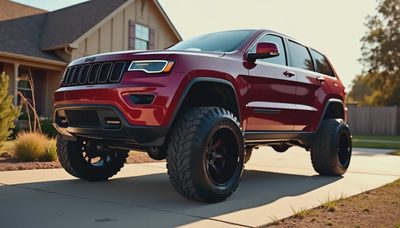
The most expensive part of the bf goodrich ko2 vs ko3 decision is often the fitment mistake. A 285/70R17 may fit one Tacoma with a mild lift and rub badly on another because wheel offset, caster, fender liner position, and bump-stop travel are different. The same nominal size is not a universal clearance guarantee.
Before ordering, measure the current tire's actual clearance at full steering lock and full compression. Inspect the upper control arm, sway-bar link, inner fender, and pinch weld. If the truck is lifted, verify alignment numbers after installation. More lift does not automatically create more usable tire clearance; suspension geometry can move the problem somewhere else.
Pay attention to load range as well. An LT tire with a stiff construction can improve durability under work loads, but it can also ride harshly on a lightly loaded half-ton truck. Set cold pressure from the vehicle placard as your starting point, then adjust only after considering load and wear. Do not copy pressure from a different model with different axles.
My shop-floor recommendation
For the bf goodrich ko2 vs ko3 choice, I would buy the KO3 when the price difference is reasonable and the truck sees mixed pavement, gravel, snow, and rocky trails. Its updated behavior makes sense for a daily-driven 4Runner, Tacoma, Wrangler, F-150, or similar rig that spends weekends away from town.
I would still choose a KO2 when a closeout price is substantial, the tire size is proven on the vehicle, and the owner understands its limits. A correctly installed, properly inflated KO2 with healthy suspension is safer and more useful than a KO3 mounted on bent wheels with worn ball joints. New rubber cannot repair old hardware.
Emma's Jeep update: her Wrangler's front tires were wearing faster on the outside shoulder. The first guess was low pressure. I checked. The real issue was toe and a tired steering component, not the tire model. We fixed the alignment, replaced the worn part, and then compared replacement options. That is the order I recommend: repair the truck, confirm fitment, compare tire prices, and only then pick the tread.
If you are deciding between these two models, bring the tire size, vehicle year, wheel offset, typical payload, and the last alignment report to the conversation. Those details tell me more than a trail photo. The best answer in the bf goodrich ko2 vs ko3 debate is the tire that matches your actual miles and remains correctly maintained after the novelty wears off.
The bolt doesn't lie.

No letters yet — pray write the first.