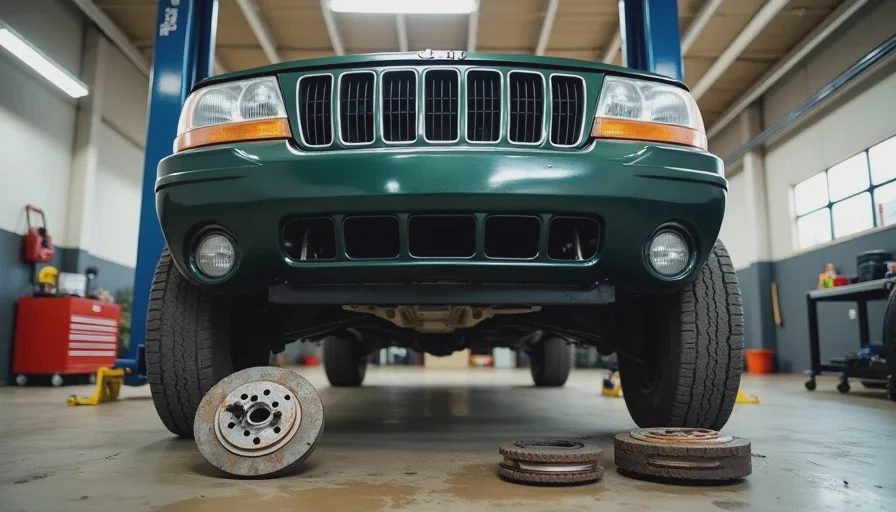
Emma's WJ has been on the lift for three weeks. I've been going through every system. Brakes, suspension, steering, cooling, fluids. I'm not cutting corners. I'm not rushing.
I told Emma she could drive the WJ once it was safe. Not once it was cool. Not once it was lifted. Safe. That's the word I used. "Safe enough to stop on ice, turn on a mountain road, and survive a panic situation."
Before she gets behind the wheel, I need to know every part of this truck is right. Here's what that process has looked like.
The Brake System: Non-Negotiable
The WJ's brake lines had surface rust. They were the originals—21 years old. They'd been through 21 Colorado winters with salt on the roads. I wasn't going to let Emma drive on original brake lines.
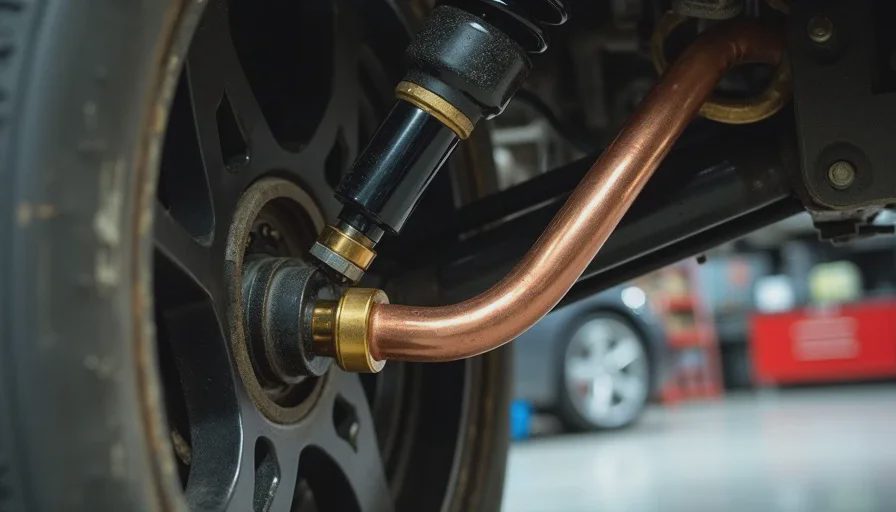
I replaced every line. Front to rear. Hard lines and soft lines. I used copper-nickel alloy lines—they don't rust. They're easier to flare. They'll outlast the truck.
The Calipers and Pads
The front calipers were sticking. I could tell from the uneven pad wear. One pad was half the thickness of the other. I replaced both front calipers, all four rotors, and every pad. Bendix pads, coated rotors. Nothing fancy. Just good parts.
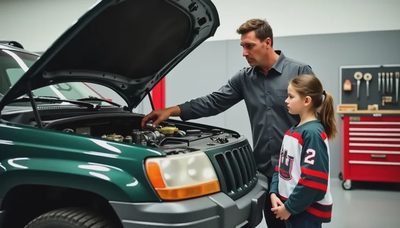
Emma came into the shop while I was bleeding the brakes. She watched me pump the pedal while the fluid ran clear. "Why does that take so long?" she asked.
"Because air compresses. Brake fluid doesn't. If there's air in the line, the pedal goes soft. The brakes don't work when you need them. So I'm pushing all the old fluid and air out of the system. Now the pedal is firm. That firmness is what stops the truck."
She nodded. "So that's why you bleed them."
"Exactly. And you need to know how to do this. If you ever do brake work yourself, you have to bleed correctly. Don't guess."
The Ball Joints: Replacing Before They Fail
The WJ's ball joints weren't loose yet. I checked them with the shovel test. They had about 0.5mm of play. That's within spec. They'd probably last another 10,000 miles.
I replaced them anyway.
Emma asked why. "Dad, you said they were okay."
"They're okay now. But Emma, I don't want you to be the one who finds out exactly when they stop being okay. A ball joint failure at highway speed is not something you drive away from. It's not worth the risk."
We installed new Spicer ball joints. I let Emma help with the press. She was tentative at first. By the second one, she was confident. She's learning.
The Overcorrection Talk
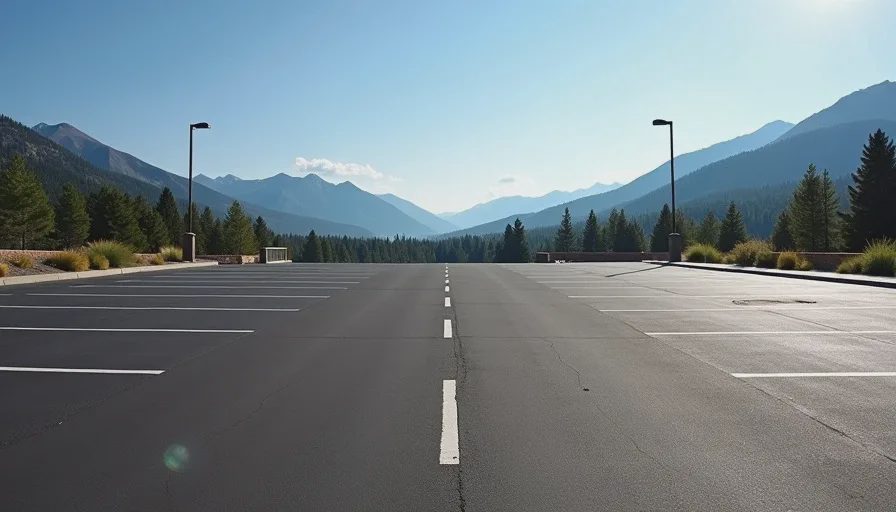
When the truck was on the ground, I took Emma for a drive in the parking lot. She wanted to get behind the wheel. I said not yet. First, she needed to watch.
I drove the WJ at 15 mph through the lot. I turned sharp left, then sharp right. I braked hard. I explained what I was feeling.
Then I stopped the truck and put it in park. I looked at her.
"Emma, here's the thing I need you to remember. When you're in a panic situation—and you will be—your instinct will be to jerk the wheel and slam the brake. Don't. That's overcorrection. That's how you roll a truck."
"What do you do instead?"
"You stabilize first. You look where you want to go, not at the obstacle. You steer into the skid if you're sliding. You pump the brake if it's a panic stop. And you don't let your hands leave the wheel."
She listened. I could tell she was processing it.
The First Drive: Parking Lot Only
She got her first seat time last weekend. Empty school parking lot on a Sunday. I was in the passenger seat. She adjusted the mirrors, checked the seatbelt, and gripped the wheel like it might run away.
"Just idle forward," I said. "Feel the brake pedal. Feel how much pressure it takes."
She eased off the brake. The WJ rolled forward. She steered through the lot, kept it straight. Braked at the end of the row. Did it again. Then she tried reverse. Then she tried a three-point turn.
After 20 minutes, she was smiling. "It's not scary," she said. "It's just... precise."
"Good. That's how it should feel. Every movement you make has a result. That's why the suspension and brakes have to be perfect. You need to know exactly what the truck will do."
The Rule
I have a rule for Emma's driving. She can't take the WJ on public roads until she can:
Parallel park in one try
Back into a parking spot without looking at the camera
Change lanes at highway speed without hesitation
Explain why she checks her blind spot
Tell me the difference between understeer and oversteer
She's not there yet. She will be.
Why This Series Matters
I know these Emma's Jeep posts are slower than the technical content. They're personal. They're about a father and daughter.
But here's the thing: every bolt I torque on this WJ, I'm thinking about Emma. The track bar bolt at 125 ft-lbs. The ball joint nuts at 60 ft-lbs. The brake line fittings at 12 ft-lbs. I'm not just building a truck. I'm building a car for someone I love.
That changes how you work.
The bolt doesn't lie. And when I torque a bolt on Emma's truck, I double-check it.
No letters yet — pray write the first.