If you wrench on trucks, Jeeps, or SUVs long enough, you will eventually ask, what does a ball joint do? The short answer is that it connects a steering knuckle to a control arm while allowing the suspension to move up and down and the wheels to turn left and right. It is a small pivot carrying a large share of the vehicle's weight, and when it wears out, the problem is not cosmetic.
Think of a ball joint as a heavy-duty hip socket. A hardened steel ball sits inside a lubricated or sealed socket, usually protected by a rubber dust boot. That joint has to articulate through suspension travel while resisting braking loads, cornering force, pothole impacts, and the extra leverage created by oversized tires. On a stock half-ton pickup, that is already serious work. Add a six-inch lift and 35-inch tires, and the joint gets a much harder assignment.
What does a ball joint do in the suspension?
The ball joint gives the steering knuckle a controlled pivot. On many trucks, the upper and lower ball joints work together to hold the steering knuckle in position. The control arms attach to the frame, the knuckle carries the wheel hub and brake assembly, and the ball joints form the moving connection between those pieces.
As the suspension compresses over a dip, the control arms swing through an arc. The ball joints let the knuckle follow that movement without binding. When you turn the steering wheel, the knuckle rotates on the ball joints while the control arms remain attached to the frame. That combination of vertical movement and steering rotation is the entire reason the vehicle can ride, steer, and maintain alignment at the same time.
A worn joint loses that control. The wheel can shift slightly instead of tracking where the steering system tells it to go. That movement changes toe and camber as the truck rolls down the road. You might feel a vague steering wheel, a clunk over washboard roads, or a vehicle that wanders in crosswinds. Sometimes the only evidence is a front tire wearing on one edge.
I once had a Tacoma owner come in convinced his steering rack was failing. The truck pulled right, and he had already ordered an expensive rack. I lifted the front end, supported the lower control arm, and checked the wheel for vertical play. The lower ball joint moved enough to see daylight change at the taper. The rack was fine. The joint was telling the truth.
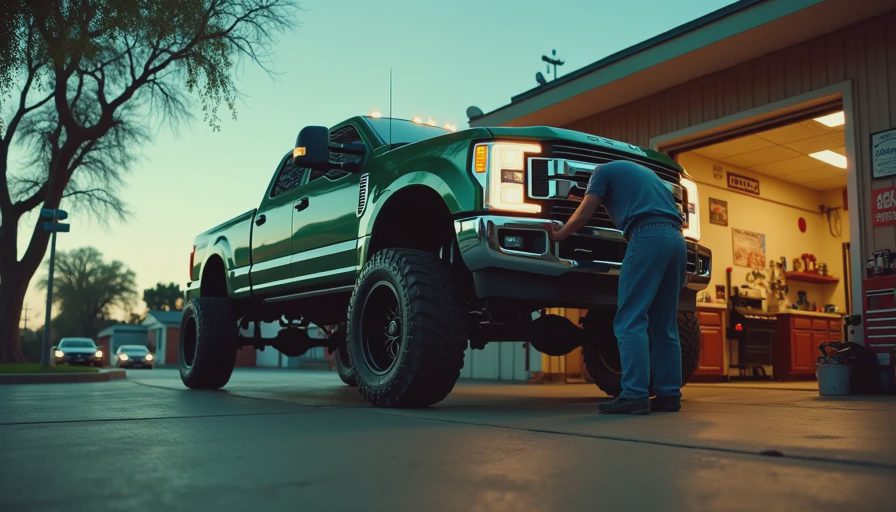
How to tell when a ball joint is failing
If you are wondering what does a ball joint do when it starts to fail, watch for changes in wheel control rather than waiting for a dramatic noise. A clunk when braking, accelerating, or crossing a curb can come from a loose joint. So can a clicking or popping sound while turning, although tie-rod ends, sway-bar links, and CV joints can create similar symptoms.
A basic driveway check begins with the vehicle safely lifted and supported. Never rely on a floor jack alone. Grab the tire at the 12 and 6 o'clock positions and rock it firmly. Movement can indicate a ball joint, wheel bearing, or another suspension problem, so this test is not a final diagnosis. Then watch the joint while someone moves the tire. Visible movement between the stud and housing is a bad sign.
Some trucks require a specific inspection method. A loaded lower control arm can hide looseness, and certain designs use a wear indicator built into the joint. Check the service manual for the correct measurement and support point. On a Jeep Wrangler, for example, you also need to separate ball-joint play from the common looseness found in track-bar ends and tie-rod ends. Replacing the wrong part is how a $100 diagnosis becomes a $700 parts pile.
The rubber boot matters, too. A torn boot lets water and grit into the socket, washing away lubricant and turning the joint into a grinding paste. A boot can look slightly split while the joint still feels tight, but that is not a repair. The joint has lost its seal, and replacement is usually the sensible move.
Why lifts and bigger tires shorten ball-joint life
What does a ball joint do on a modified truck? It still pivots the knuckle, but the geometry and loads may be much worse. A lift changes control-arm angles. Larger tires increase leverage at the hub, while heavier wheels add rotating and unsprung weight. Wheel spacers push the tire farther outward and increase leverage again.
That does not mean every lift destroys the front end. It means the suspension needs parts matched to the new geometry. A quality adjustable control arm can restore a workable angle, but it cannot compensate for a neglected joint, loose hardware, or an alignment performed before the suspension settled. I have seen brand-new lift kits installed with factory ball joints already loose because the owner assumed new springs meant a new front end.
After any suspension modification, inspect the ball joints, tie-rod ends, wheel bearings, and control-arm bushings. Torque fasteners with the vehicle at the correct ride position when the procedure calls for it. Do not guess at torque values from memory; a torque wrench and the factory service information cost less than a replacement knuckle.
Replacement choices and the real repair decision
When a ball joint fails, replacement cost depends on access, design, and whether the joint is serviceable. A press-in joint may take several hours if the knuckle must be removed and the old joint is seized. A bolt-in design can be quicker, but rusty hardware can erase that advantage. Shop labor commonly lands in the hundreds per side, with parts adding roughly $50 to $250 or more depending on the vehicle and part quality.
I favor a reputable OE-style or heavy-duty replacement from a known suspension supplier over the cheapest unbranded kit online. Brands such as Moog, Spicer, and Mevotech offer different product lines, so the name alone is not a magic guarantee. Match the part to the vehicle, lift height, and intended use. A mall crawler and a truck that spends weekends on rocky trails do not need identical hardware.
Replace related worn parts while access is available, but do not automatically replace every component in sight. Measure first. If the opposite joint has no play, an intact boot, and reasonable mileage, it may not need replacement today. Afterward, get a proper four-wheel alignment where applicable, then recheck lug nuts and suspension fasteners after the first few miles.

A practical inspection routine before a long trip
Before towing, overlanding, or driving into the mountains, inspect the front end on level ground. Look for torn boots, grease leakage, uneven tire wear, and fresh metal dust around a joint. Jack and support the vehicle correctly, check for movement at the tire, and have a helper turn the steering wheel slowly while you watch the linkage.
Do not confuse grease fittings with a maintenance schedule. A serviceable joint should receive the specified grease at the recommended interval, not a full cartridge every weekend. Pumping grease into a damaged boot can hide the evidence without fixing the looseness. If a joint is dry, rusty, or loose, grease is not a resurrection spell.
If the wheel shifts noticeably, the steering feels unpredictable, or the joint is visibly separating, park the vehicle until it is repaired. A failed ball joint can let the knuckle fold outward, damaging the axle, brake hose, fender, and tire. That is a bad roadside repair, especially on a loaded truck.
The answer from the shop floor
So, what does a ball joint do? It lets the wheel follow suspension movement and steering input while holding the knuckle securely in place. That job is easy to ignore because the part is hidden behind the wheel, but its condition affects alignment, tire wear, braking stability, and control.
If your truck has a clunk, wandering steering, or unexplained front-tire wear, do not order a rack, lift kit, or random set of bushings because a forum guessed at the problem. Lift it correctly, observe the joint under load, and measure the play against the service information. I checked. The bolt doesn't lie.



No letters yet — pray write the first.