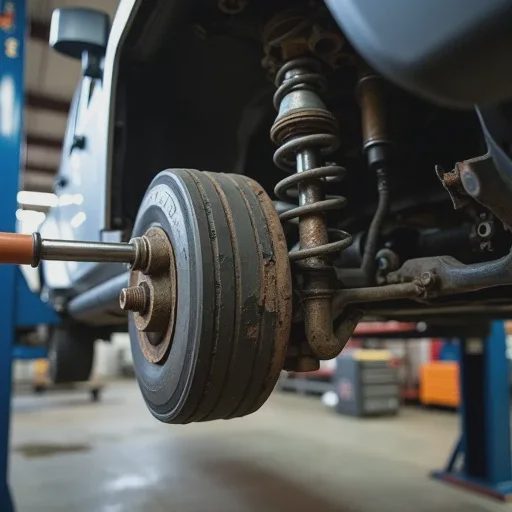
Kyle's 2012 Jeep Wrangler JK rolled into my bay on a Thursday afternoon. He'd called me three days earlier—voice tight, trying to play it cool. "Walt, hit a pothole on I-70 at 65. Steering wheel damn near broke my thumb. I put a new steering stabilizer on it. It's worse now."
I hear this at least once a week. A guy throws parts at a death wobble, gets frustrated, and finally calls someone who actually works on trucks for a living. Kyle had already done the internet's recommended fix list: new track bar bushings, fresh alignment, and a heavy-duty steering stabilizer from a brand he found on a forum. Cost him about $400 and a full Saturday. Didn't fix a thing.
We put the JK on the lift. I grabbed my pry bar and started checking. Here's what the internet didn't tell him—and what I'm about to show you.
The Shovel Test: Finding the Real Problem
Most DIYers think a visual inspection is enough to check ball joints. It's not. Here's the test I do on every death wobble job that comes through the door.
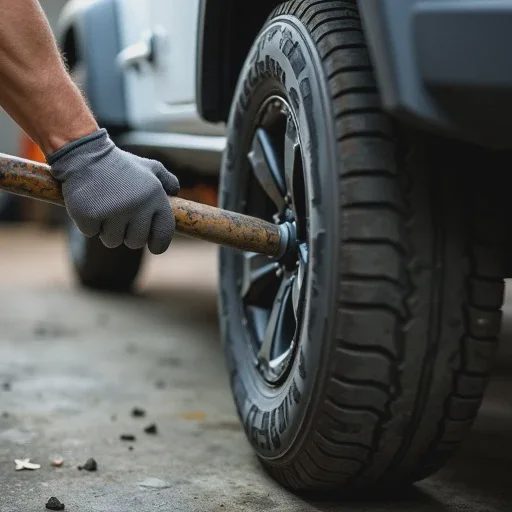
Jack the front axle up. Put it on stands. Take a shovel—the long-handled kind you'd use for snow—slide it under the tire, and step on the handle to create upward leverage against the knuckle. If the ball joints are worn, the knuckle will move at the C where it meets the axle housing. It might be a millimeter of movement. That's all it takes.
Kyle's upper ball joints had vertical play. Not enough to see from a casual glance. Enough to start the oscillation. I called him over and showed him. His face went pale. "I checked those," he said. "They looked fine."
That's the problem. Looking isn't checking. Measuring is checking.
What We Found: The Full Damage Report
Here's everything that was wrong under that JK:
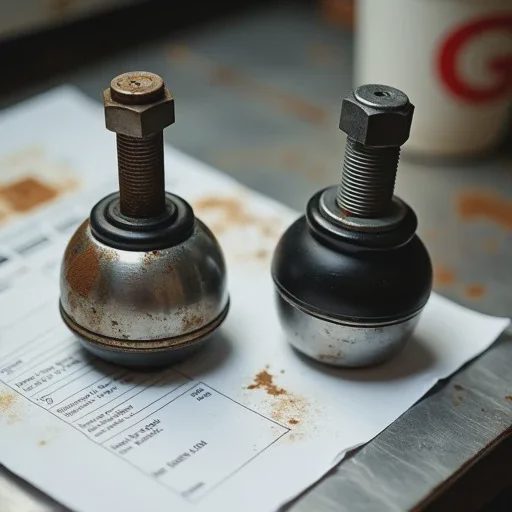
Upper and lower ball joints: Both sides had measurable vertical play. The uppers were worse—about 1.5mm of movement. That's enough to start the death wobble chain reaction.
Track bar bushing (axle side): Wallowed out from 60,000 miles of Colorado washboard roads. The bolt hole was no longer round. It was oval.
Passenger side drag link end: Had rotational play. Not a ton. But enough to add slop to the steering system.
Steering stabilizer: Brand new. Pointless. It was masking the problem, not fixing it.
The Chain Reaction That Creates Death Wobble
Here's what actually happens when you drive a JK with worn ball joints and a loose track bar. Hit a bump at speed. The axle shifts slightly because the track bar bushing is wallowed out. That shift changes the toe angle. The worn ball joints can't dampen the oscillation. The steering wheel starts to shake. The shaking gets worse because the drag link end has play. And now you've got a full-blown death wobble that feels like the front axle is trying to shake itself off the frame.
The Fix: Replacing What Actually Failed
I don't throw parts at problems. I fix them. Here's what went into Kyle's JK and why.
Spicer Ball Joints (Upper and Lower)
OEM replacements. No "heavy-duty" gimmicks. The factory units lasted 60,000 miles on a lifted truck. That's respectable. The aftermarket "heavy-duty" ball joints I see guys buying from discount websites are often just grease-filled voids with thin housings. I've cut them open and measured the wall thickness. The difference is real.
Track Bar Bushing and Bolt Upgrade
We didn't replace the whole track bar. That's usually a waste of money unless it's bent. We reamed the axle-side mount to accept a 9/16-inch bolt instead of the factory 14mm. That extra thousandth of an inch eliminates the slop that lets the track bar shift. Then we pressed in a new bushing from a brand I trust. Total cost: about $120 for parts.
Drag Link End (Passenger Side)
Replaced the worn end with a Spicer unit. It's the only brand I'll use for steering components on a daily driver.
Torque Specs (This Is the Step Everyone Skips)
Here's exactly what I torqued and to what value:
Component | Torque Spec |
|---|---|
Track bar bolts | 125 ft-lbs minimum |
Control arm bolts | 130 ft-lbs |
Ball joint nuts | 60 ft-lbs |
Drag link ends | 55 ft-lbs |
Steering stabilizer | 50 ft-lbs |
No "good-n-tight." No "that feels about right." Actual numbers.
The Steering Stabilizer Conversation
Kyle asked me if he should buy a better stabilizer. I told him no.
Here's the truth: a steering stabilizer is a hydraulic damper. Its job is to absorb minor feedback and keep the wheel from snapping out of your hand if you hit a rock. It does not fix death wobble. Death wobble is a mechanical oscillation caused by slop in the front suspension geometry. A stabilizer can mask the symptoms for a week or a month. But that slop is still there, wearing out your ball joints and tie rod ends faster.
I told Kyle to put his factory stabilizer back on. It was fine. It just wasn't masking the problem anymore. With a tight front end, that's all you need.
The Cost Breakdown
Kyle's total bill came to about $1,200. Here's what he paid for:
Spicer ball joint set (upper and lower): $350
Track bar bushing with hardware upgrade: $120
Drag link end: $80
Labor (4 hours): $400
Alignment check after repair: $100
Shop supplies: $50
What You Can Check in Your Driveway
Before you call a shop or buy a single part, do this:
Dry steering test: Have a buddy turn the wheel back and forth about a quarter turn with the engine off. Put your hand on every joint in the steering linkage. If you feel clunking that isn't smooth rotation, you've found slop.
Visual boot check: Look at every ball joint and tie rod end. If the grease boot is torn, dirt's in and grease is out. That component is on a countdown.
Track bar bolt torque: Get a torque wrench under there and check the track bar bolts. If they're loose, tighten them to 125 ft-lbs and see if the wobble disappears. Sometimes that's all it takes.
Tire condition: Uneven wear from a bad alignment can cause vibration that mimics death wobble. Rotate your tires and check for cupping.
Six Months Later: What Kyle Told Me
I saw Kyle at the grocery store in Silverthorne last week. He walked up, shook my hand, and said, "Walt, I took that Jeep to Moab. Ran the whole thing. Not a single shake at highway speed the whole way there."
Six months. No wobble. No new parts. Just the right parts, torqued correctly, and a stabilizer he didn't need.
The bolt doesn't lie.


No letters yet — pray write the first.