Most people notice a clunk, a lean, or a steering wheel that sits off-center and then start guessing. That is how you end up buying parts twice. Auto suspension parts usually wear in a pattern, and if you know the pattern, you can fix the right thing the first time instead of feeding money to the internet. I see this every week in the shop: a truck comes in with a complaint about wandering, but the real issue is worn bushings, tired shocks, or a loose ball joint that has been ignored for 20,000 miles.
If you wrench on your own rig, this is where a little discipline pays off. The front end is not a mystery. It is a stack of joints, bushings, springs, and dampers doing a job with very little forgiveness. Miss one bad part and the others work harder. That is how a $90 repair turns into a $900 front-end refresh.
The first parts to go bad
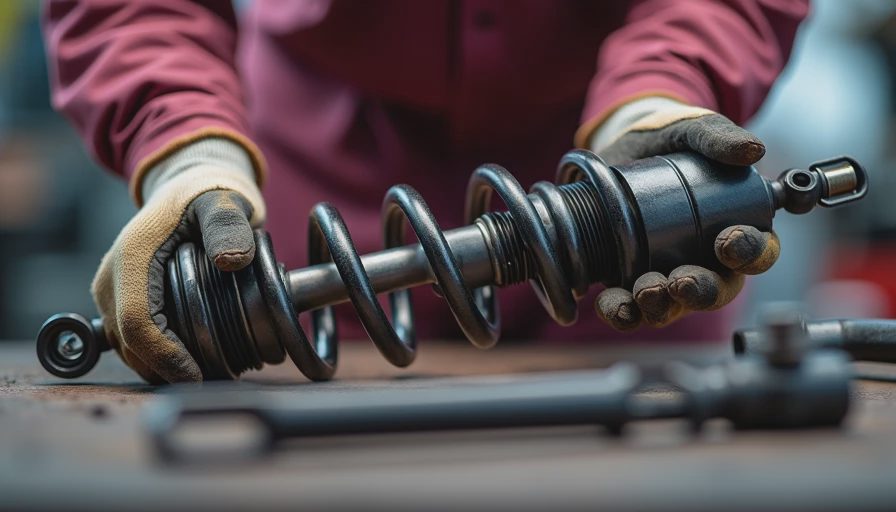
On a high-mileage truck or SUV, the usual first failures are shocks, sway bar links, control arm bushings, tie rod ends, and ball joints. Springs can sag too, especially if the vehicle has been hauled hard or loaded heavy for years. Shocks are the easy one to spot because they leak or stop controlling bounce, but worn bushings are sneakier. They let the wheel move where it should not, which makes the steering vague and the tires wear funny.
The cheapest way to think about auto suspension parts is this: dampers control motion, joints locate the wheel, and bushings keep the geometry from wandering. If one piece goes soft, the whole front end starts acting tired. A set of decent shocks might run $180 to $450 for common trucks. Ball joints and control arm parts can push a repair into the $300 to $700 range per side once you add labor, and that is before alignment.
If the truck has over 100,000 miles and the front tires show feathering or cupping, I stop looking for the shiny problem and start looking for the worn one.
What the noise really means
A clunk over potholes is not a personality trait. It usually means something has play in it. A sharp knock on one side often points to a sway bar link, upper control arm bushing, or a loose shock mount. A dull thud on bigger hits can be a tired strut or a blown bump stop. If the steering wheel wanders on the highway, that is usually not the tire pressure talking. It is more often loose tie rods, sloppy ball joints, or alignment that keeps getting knocked out by worn parts.
Here is where people waste money: they blame the tire first. Tires can cause vibration, sure, but worn suspension parts make the tire wear bad in the first place. I have seen owners put new all-terrains on a Jeep, then watch them cup in 6,000 miles because the front end still had play. At that point you are not buying tires anymore. You are donating them to the road.
How I inspect a front end in the shop
When I check auto suspension parts, I do not start with guesswork. I get the vehicle in the air, grab the tire at 12 and 6, then 3 and 9, and feel for movement. That tells me a lot before I ever touch a pry bar. I look for torn boots, rust trails around ball joints, cracked bushings, and any sign that the control arm is shifting under load. Then I bounce the wheel, watch the shock, and listen for the ugly little click that tells you the hardware is loose.
I also check ride height side to side. If one corner sits low by more than about half an inch on a stock truck, something is sagging. That can be a spring, a tired leaf pack, or a bent part from a curb hit. On lifted rigs, the inspection gets stricter because the geometry is less forgiving. A 2-inch lift with the wrong control arms can drive fine on the test road and still chew tires for months.
I checked.
What to replace together, not one at a time
This is the part people learn the hard way. If one ball joint is loose, the other side is usually not far behind. If both front shocks are original, replace them as a pair. If a truck has cracked lower control arm bushings on one side, the other side is often not healthy either. Matching parts across the axle keeps the ride and steering from feeling half new and half worn out, which is a miserable way to drive.
Good auto suspension parts do not have to be boutique. Bilstein, KYB, Moog, and Delphi all make sensible parts for a lot of common applications. Dorman has its place for certain repair pieces, but I would rather spend once on a known decent component than chase a bargain that gets sloppy in one winter. For a front-end refresh on a typical full-size truck, a homeowner-style DIYer might spend $500 to $1,200 in parts if both sides are getting done, plus alignment money and a long Saturday.
If the truck is mostly a commuter with light towing, stock-type replacements are usually the right call. If it sees washboard roads, mountain passes, or heavy loads, a better damper earns its keep fast.
The mistakes I keep seeing on lifted rigs
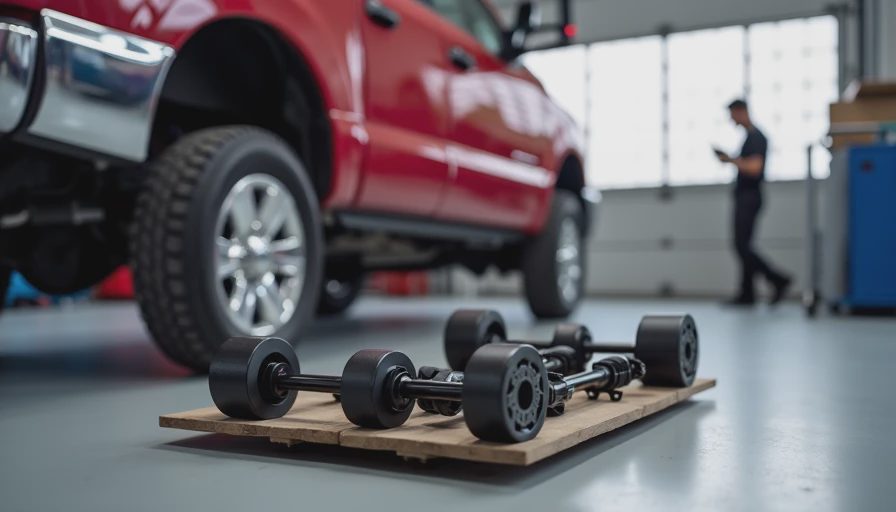
Lift kits do not break everything by themselves. Bad installs do. The number one sin is installing parts and never torqueing them at ride height. Bushings get preloaded, then they tear early because the suspension is twisted before the truck even leaves the driveway. The second mistake is ignoring alignment after geometry changes. A lift without a proper alignment is just an expensive way to ruin tires faster.
The other trap is buying the cheapest kit and assuming the hardware matters less than the stance. It does not. I have seen brand-new coilovers installed with loose hardware, missing washers, or reused bolts that should have gone in the scrap bin. That is how you get the clunk that nobody can diagnose over text. When in doubt, use fresh hardware where the manual calls for it, torque it to spec, and recheck it after a few hundred miles.
If your steering wheel shakes at 55 mph, do not blame balance alone. On a truck with worn joints or a sloppy track bar, the tires are often just reporting the problem.
Buying the right parts without overpaying
Buying auto suspension parts is easier when you know what job the truck actually does. A daily driver that occasionally tows a camper needs durable stock-style parts and a good alignment more than it needs a flashy kit. A trail rig that sees rocks and ruts needs stronger joints, quality shocks, and hardware you can service without a fight. There is no trophy for paying extra for a color-matched box.
If you are shopping online, compare the part numbers, not the marketing copy. A $120 control arm that comes with flimsy bushings is not a deal if it lasts one winter. A $300 shock set that keeps a loaded SUV settled on rough highway might save tires and steering parts for years. That is where the money comes back. If the front end feels loose, start with inspection, then buy only what the inspection proves is bad.
Auto suspension parts are not glamorous, but they are the reason the truck tracks straight, brakes clean, and does not rattle itself apart on the way to the trail. Fix the worn piece, torque the hardware, get the alignment, and stop hoping the next pothole is kinder than the last one. The bolt doesn't lie.


No letters yet — pray write the first.