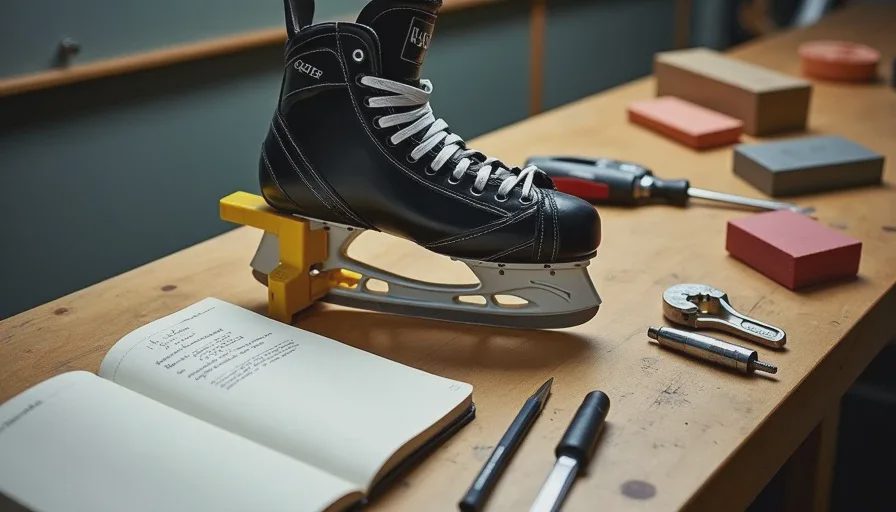
I spent Saturday morning at the ice rink. Emma had a game at 8:00 AM—the Summit County Youth Hockey League, a bunch of 14-year-olds who skate faster than I can drive. I do the equipment for her team. Skates, pads, helmets. I'm the guy in the corner with a toolbox and a sharpening stone.
Standing by the glass, watching the kids carve into the ice, I realized something. Hockey edges and caster angles are the same problem. You get them wrong, and you don't go where you want.
The Edge is Everything
In hockey, your edges are everything. The inside edge and the outside edge of the skate blade. They determine how you turn, how you stop, how you accelerate.
If the edges are off—if one is sharper than the other, or if the hollow isn't consistent—the skate won't track straight. You'll drift. You'll wobble. You'll fall.
I've been sharpening skates for four years. I use a hand sharpener with a guide. Every pass has to be consistent. Too much pressure on one side, and the edge is gone. You can't get it back.
It's the same with caster angles.
The Parallel
Caster angle controls how the steering returns to center. When you turn the wheel, caster pushes it back to straight. If the caster angle is different from side to side, the truck pulls. If it's out of spec, the truck wanders.
A skate that's sharpened incorrectly pulls to one side. A truck with incorrect caster pulls to one side. Same problem. Same physics.
The Lesson I Learned from a Missing Edge
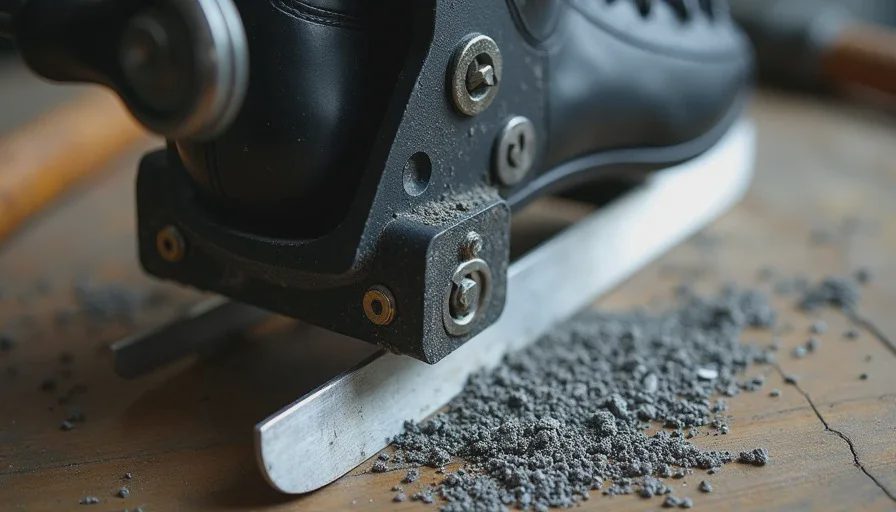
I had a kid on the team whose skates kept causing him to lean right. He said it felt like the ice was tilted. I checked his edges. The right skate had a burr on the inside edge—a tiny piece of metal that had folded over. When he skated, that burr caught the ice and pulled him right.
I ground it off. He skated straight. Problem solved.
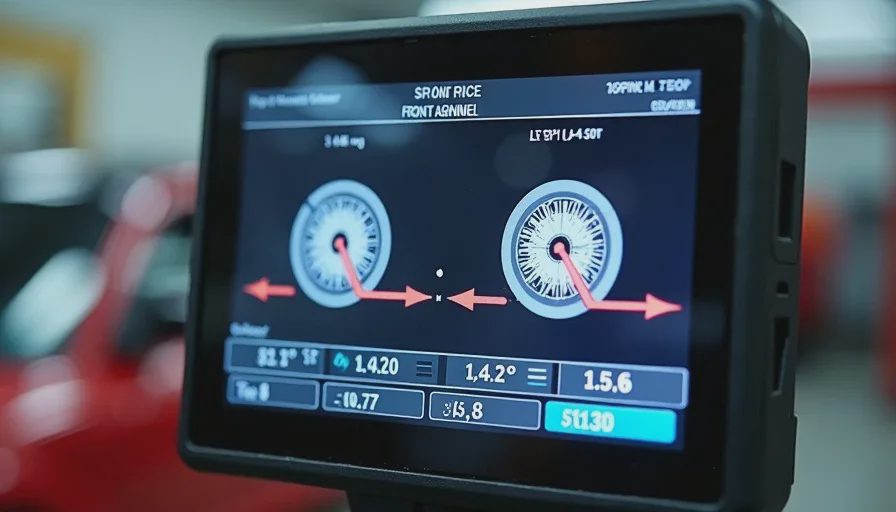
A few weeks later, a customer came in with a truck that pulled right. I checked the alignment. The caster was 1.5 degrees different from side to side. Same problem. Something was pulling the wheel to one side. I adjusted the caster, and the truck tracked straight.
The Precision of Small Adjustments
A hockey edge changes with a single pass of the sharpening stone. You take off too much, and the edge is gone. You take off too little, and the burr remains. It's a precision measurement—hundredths of an inch.
Caster is the same. A degree of caster is a small number. You can't feel it in the shop. You can only feel it on the road. But that degree is the difference between driving straight and fighting the wheel.
I've had customers argue with me about caster. "It's only one degree off," they'll say. "I don't think I need to fix it."
I tell them the same thing I tell the hockey kids: "One degree is enough to make you miss the turn."
The Control That Comes from Precision
Good skaters make it look easy. They glide. They carve. They stop on a dime. That ease comes from precision edges and hours of practice.
Good trucks drive the same way. When the alignment is right, the truck tracks straight. It doesn't wander. It doesn't pull. It drives like it's on rails.
That control comes from precision.
What I Do for My Daughter
I sharpen Emma's skates. I check her edges before every game. I know her boot size, her preferred hollow, and the way she leans when she skates.
I torque the bolts on her WJ the same way. I check the caster before every alignment. I know her driving style, her confidence level, and the roads she'll be driving.
I want the same things for her skates and her truck: precision, confidence, and control.
The Rule
The bolt doesn't lie. And neither does a skate edge.
If your truck doesn't track straight, check the caster. If your skate doesn't track straight, check the edge.
The principles are the same. The solution is the same: measure, adjust, and measure again.


No letters yet — pray write the first.